Best Camera for License Plate Recognition: Top 5 LPR Cameras for 2026
Choosing the right camera for license plate recognition (LPR) can dramatically improve vehicle monitoring, tolling, parking enforcement, and security. This guide highlights five leading options featuring embedded ANPR/LPR, advanced WDR, night vision, and robust build quality. Each pick combines high-resolution imaging with smart analytics to capture readable plates in varied lighting and weather conditions. Whether you manage a parking facility or a gated community, these cameras offer reliable LPR performance and easy integration with standard NVR systems.
| Product | Brand | Key Strength | Link |
|---|---|---|---|
| ANNKE 4MP ANPR IR Varifocal Bullet Network Camera | ANNKE | Embedded ANPR; 120dB WDR; durable housing | https://www.amazon.com/dp/B0GCMSFC6B?tag=topdcameras-20 |
| Amcrest License Plate Recognition Camera | Amcrest | 8–32mm lens; IP67; active deterrents | https://www.amazon.com/dp/B01F7WSG56?tag=topdcameras-20 |
| Anpviz LPR Camera | Anpviz | 4MP; 5x motorized varifocal; 120dB WDR | https://www.amazon.com/dp/B0FDQ81PQG?tag=topdcameras-20 |
| iDS-2CD7A46G0/P-IZHS DeepinView ANPR | Real HD | DarkFighter; 140 dB WDR; IP67 | https://www.amazon.com/dp/B0GH7HZ12Q?tag=topdcameras-20 |
| Rekor Edge Pro LPR Camera | Rekor | Edge AI LPR; 4G; >98% recognition | https://www.amazon.com/dp/B0FN4V3F81?tag=topdcameras-20 |
These selections emphasize LPR reliability, fast recognition, and flexible deployment. Each product supports either embedded or cloud-ready analytics, with varying lens options, night vision capabilities, and durability for outdoor use. The table above helps you compare core strengths at a glance, guiding deeper reading into each model’s features and use cases.
ANNKE 4MP ANPR IR Varifocal Bullet Network Camera

The ANNKE model delivers 4MP high-resolution imaging with embedded ANPR processing for on-device recognition. It supports face capture and people counting, with a recognition rate of at least 95%. It distinguishes humans from vehicles and supports line crossing detection, blocklists, and allowlists up to 10,000 records. In low light, its 0.003 Lux sensitivity combined with 120dB True WDR maintains legible detail for plates and faces, even against strong backlight. The metal housing and IP66-like protections ensure durability in parking lots or exteriors.
Amcrest LPR Camera With AI Capabilities

Amcrest’s LPR camera emphasizes flexible optical zoom with an 8–32mm lens to adapt to varied distances. It provides license plate recognition within a range of approximately 26 to 98 feet and can recognize vehicle type and color alongside plate data. The device supports IVS features such as Tripwire and Intrusion, helping correlate LPR events with vehicle behavior. It stores locally on MicroSD up to 256GB and integrates with common web browsers, though setup may require Edge in IE mode for best results. Its heavy-duty IP67 housing and active deterrents (red/blue LEDs) offer deterrence alongside capture.
Anpviz 4MP ANPR Bullet Camera

The Anpviz LPR camera offers 4MP resolution with a 5x motorized varifocal lens (2.7–13.5mm) for flexible field of view from wide to narrow. This flexibility is ideal for optimizing plate capture at different distances, whether in a parking lot or along a roadway. The camera integrates standard LPR functionality with smart features, delivering reliable plate capture and identification in diverse lighting conditions. With IP67 weatherproofing, it’s designed for outdoor deployments in commercial environments.
iDS-2CD7A46G0/P-IZHS DeepinView ANPR
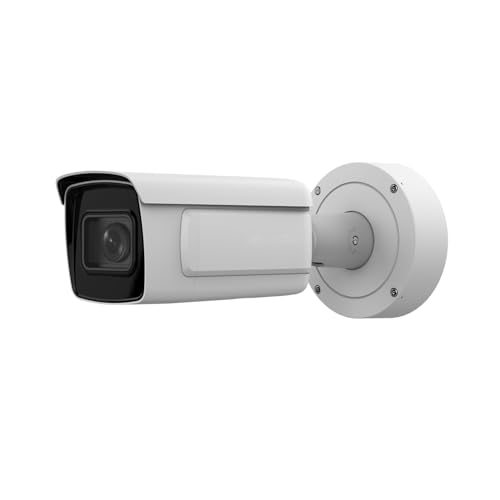
This Real HD DeepinView camera emphasizes low-light performance with DarkFighter, enabling clear plate capture in dim conditions. It features 140 dB WDR to balance strong backlight scenes, ensuring legible license plates near entry points with variable lighting. The IP67 rating provides weather resistance, supporting outdoor installations in parking drives and entrances. The combination of 4MP resolution and advanced WDR improves recognition reliability across challenging scenes.
Rekor Edge Pro LPR Camera
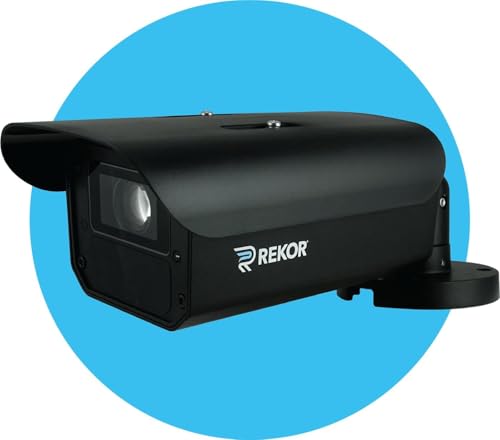
The Rekor Edge Pro brings AI-powered license plate recognition with a strong emphasis on accuracy. It supports integrated cellular connectivity for remote deployments and does not rely on wired networks. Its AI recognition is designed to outperform competing systems, supporting multiple lanes within a broader capture range. The camera’s 4G MIMO and up to high-speed data transfer suit tolling or remote security checkpoints where network reliability is a concern.
Titanium IP-5IR4A3B4-MZ-LR 4MP LPR Camera

The Titanium IP-5IR4A3B4-MZ-LR offers a 4MP resolution with a motorized 8–32mm lens and true WDR. It supports various power options (DC12V/AC24V/PoE) and includes an SD card slot for local storage up to 256GB. Built for robust outdoor use with IP67 rating, this camera is suitable for perimeter security, driveways, and entry gates requiring reliable LPR under harsh conditions.
Buying Guide
Key considerations when selecting an LPR camera include image clarity, recognition accuracy, and lens versatility. A higher resolution (4MP or more) improves plate readability at greater distances, while embedded ANPR reduces latency by processing data on-device. Lens options like motorized varifocals (2.7–13.5mm or 8–32mm) allow tuning for specific site distances and traffic speeds. Look for robust night vision (IR range and low lux performance) and wide dynamic range to handle backlit scenarios from vehicles. Weather resistance (IP67 or higher) ensures reliable outdoor operation. Some models offer deterrent features or integrated cellular backup for remote sites, which can be decisive in parking lots or rural checkpoints. Finally, consider integration with your NVR or NVR software, including supported video codecs (H.265/H.264), storage options, and compatibility with browsers or specific apps for management.
When comparing options, balance plate recognition distance and accuracy with installation practicality. For dense urban environments, cameras with 120dB+ WDR and strong low-light performance help maintain legibility. For remote sites, models with cellular connectivity and edge AI can simplify deployment and reduce dependency on local networks. Across these picks, all provide a blend of clarity, reliability, and scalable analytics suitable for commercial and municipal applications.