Best Camera Fiber Optic Cables for High-Quality Video
Fiber optic cables deliver ultra-fast, interference-free data transmission ideal for camera setups, live streaming, and high-resolution imaging. This guide highlights five top camera-focused fiber optic cables that support 4K and HDR, offer long reach, and maintain signal integrity across demanding environments. Each option features durable construction, high bandwidth, and compatibility with modern video gear to help you capture crisp, reliable footage.
| Product | Brand | Length | Type | Key Benefit |
|---|---|---|---|---|
| Highwings 4K Fiber Optic HDMI Cable | Highwings | 75 ft | HDMI Fiber Optic | Long reach with 18Gbps bandwidth |
| DavVision USB A to USB C Fiber Optic Cable | DavVision | 33 ft | USB Fiber Optic | Low latency, USB 3.2 Gen2 performance |
| DTECH Ultra Slim Fiber Optic HDMI 2.0 Cable | DTECH | 150 ft | HDMI Fiber Optic | No boosters required over long distances |
| Fiber Optic USB C Cable (50ft) | swegltek | 50 ft | USB-C Fiber Optic | 10Gbps, slim, Kevlar-reinforced |
| iBirdie 4K Fiber Optic HDMI Cable | iBirdie | 150 ft | HDMI Fiber Optic | Supports 4K60, HDR, 18Gbps |
The following sections detail each option, including its fit for camera workflows, installation notes, and what to consider when choosing a fiber optic cable for your setup.
Highwings 4K Fiber Optic HDMI Cable

The Highwings 4K Fiber Optic HDMI Cable is built for immersive video delivery across long runs. It supports 3840 x 2160 @ 60 Hz and carries 18Gbps bandwidth, enabling smooth 4K HDR video with minimal latency. The gold-plated connectors improve signal integrity and corrosion resistance, making it suitable for studio environments, event rigs, and home theater installations where long cable runs are necessary. It remains backward compatible with HDMI 1.4/1.3 devices, providing broad compatibility for mixed gear ecosystems.
Designed specifically to function as a unidirectional HDMI fiber optic cable, it requires attention to connector orientation in complex setups. While its length is ample for camera-to-display runs without repeaters, ensure your source and display endpoints align with the directional expectations to maximize performance. The rugged braid adds durability for stage or field use, and the cable’s fire-and-forget plug-and-play operation reduces setup time.
DavVision USB A To USB C Fiber Optic Cable

The DavVision USB A to USB C Fiber Optic Cable targets modern camera workflows that rely on USB-C connections for high-bandwidth data transfer. It features a built-in German SiliconLine chip to achieve up to 10Gbps over optical links, offering low latency and minimal interference—crucial for real-time video capture, conferencing, and live-streaming with high-resolution cameras. The connector design emphasizes directional transmission, so connect the USB A end to the source and the USB C end to the display or capture device as directed.
Durability is addressed with 24K gold-plated connectors and a robust zinc alloy shell for heat dissipation and EMI shielding. The cable’s dual-layer coating provides protection against environmental factors, making it suitable for broadcast studios and mobile shoots. A word of caution: ensure the directionality aligns with your hardware to prevent signal issues, and avoid excessive bending to protect the internal fiber core.
DTECH Ultra Slim 150 Feet Fiber Optic HDMI Cable

The DTECH Ultra Slim 150 Feet fiber optic HDMI 2.0 cable is designed for long-distance 4K transmission without signal degradation. It supports 4K at 60 Hz and 18Gbps bandwidth, enabling reliable connections for projectors, large displays, and capture devices in lecture halls, studios, or home theaters where copper runs fail. The fiber optic design minimizes EMI and allows in-wall installations, reducing cable clutter while maintaining picture quality over extended distances.
Installation emphasizes the “no booster” advantage—no active repeaters are required for the stated length, simplifying setup. The slim profile helps with cable routing through tight spaces, but care should be taken to avoid sharp bends that could stress the fiber core. This cable pairs well with high-end projectors and video switchers that demand stable, high-bandwidth connections across long spans.
Fiber Optic USB C Cable (50ft)

The Swegltek fiber optic USB-C cable focuses on high-speed data transfer with 10Gbps capability over 50 feet. Its ultra-slim, Kevlar-reinforced build resists flexing and wear, making it a practical choice for studio setups, classrooms, and boardrooms where extended USB-C connectivity is required for cameras, webcams, and peripheral devices. The cable’s compatibility with USB 3.2/3.1/3.0 devices and plug-and-play functionality simplifies integration with laptops and conferencing systems.
Consider this option if your camera or capture device relies on USB-C and you need a longer reach than typical USB-C copper cables provide. The primary limitation is ensuring your device can supply sufficient power, as some USB-C fiber solutions require an active power source to function reliably. Always verify power needs in your camera-to-switch or capture-card chain.
Teslong USB C Endoscope Camera (For Reference)

This Teslong endoscope is listed to illustrate a related fiber optic application for inspection tasks. While not a primary camera fiber optic cable in the guide, it demonstrates how fiber optics enable flexible camera access in tight spaces and industrial contexts. It features an 8 LED light system, USB-C connectivity, and portability. It is not a direct match for long-distance professional video runs, but it provides context for fiber optic flexibility in camera work.
iBirdie 4K Fiber Optic HDMI Cable 150 Feet
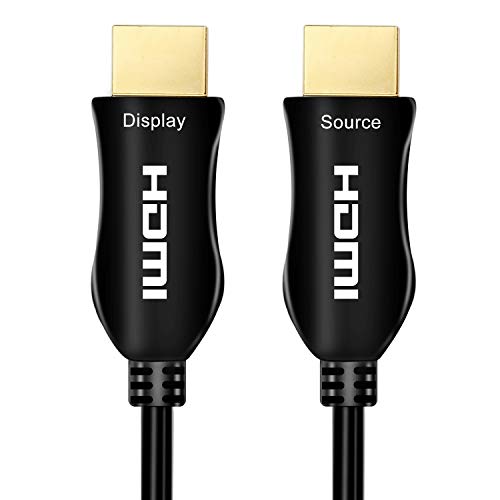
The iBirdie 4K Fiber Optic HDMI Cable supports 4K60 Hz, HDR, HDCP 2.2, and 18Gbps bandwidth over a long 150-foot run. This directional active cable is designed to connect sources to displays while maintaining high-quality video transmission for home theaters, classrooms, or broadcast setups where long HDMI runs are required. The active fiber design helps ensure signal integrity across the entire distance, reducing the need for repeaters or boosters in many installations.
The product lineup demonstrates a range of fiber optic options for camera-centric workflows, from HDMI-focused long-haul cables to USB-C fiber links. When choosing, consider distance, device compatibility (HDMI vs USB-C), directionality, and whether you need passive or active cables. In addition, assess environmental factors such as installation paths, wall-in routing, and mount setups, as these influence cable selection and durability in the field.
Buying Guide
- Distance and signal integrity: For long runs, fiber optic cables outperform copper by maintaining 4K HDR quality with minimal degradation. Choose cables with the appropriate length for your setup and verify they support 4K@60 Hz and 18Gbps or higher.
- Connection type and device compatibility: HDMI fiber optic cables suit cameras and displays with HDMI ports, while USB-C fiber cables fit devices offering USB-C video or data transfer. Ensure the cable direction matches your source and display configuration.
- Active vs passive design: Active fiber cables require power and can boost signal over long distances, which is crucial for very long runs. Passive designs work well for shorter distances or closer-to-source connections.
- Durability and installation: Look for rugged housings, braided jackets, and Kevlar reinforcements if you anticipate frequent movement or field use. Consider cable flexibility and bend radius to avoid fiber damage.
- Compatibility with existing gear: Check for compatibility with 4K HDR, HDCP 2.2, and audio formats like ARC or EARC if you rely on system-wide audio routing.
- Future-proofing: If you plan to upgrade to higher-resolution displays or new cameras, prioritize cables rated for higher bandwidth (18Gbps or more) and support for newer HDMI standards.
- Maintenance and care: Avoid knotting or tight bends; store cables properly; protect connectors from dust and corrosion to preserve signal quality over time.