Best Camera Bags for Backpacking: Durable and Functional Picks for Photographers
Finding the best camera bag for backpacking ensures your valuable photography gear stays protected and organized on your adventures. Whether you trek through rugged trails or navigate urban landscapes, a camera bag tailored for backpacking offers waterproof protection, customizable compartments, and comfortable carrying solutions. Below is a quick summary of top-rated camera bags designed to meet the diverse needs of backpacking photographers.
| Product | Brand | Key Features |
|---|---|---|
| MOSISO Camera Backpack | MOSISO | Waterproof hardshell, removable padded inserts, laptop compartment, tripod holder, anti-theft pocket |
| Lowpro Lens Trekker 600 AW III | Lowepro | Fits large telephoto lenses, ActivLift System harness, ergonomic torso harness, padded waist belt |
| VSGO Pocket Ranger Expandable Backpack | VSGO | 35L-43L expandable, waterproof Teflon coating, multiple carrying modes, aluminum support frame |
| Moultrie Camera Field Bag | Moultrie | Holds up to 6 game cameras, removable SD card case, 3 exterior pockets |
| RAINSMORE Camera Bag Backpack | RAINSMORE | Large capacity, anti-theft design, customizable padded dividers, tripod holder, rain cover |
MOSISO Camera Backpack with Waterproof Hardshell
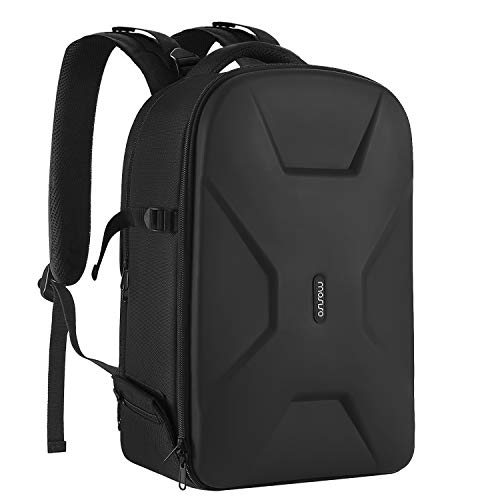
The MOSISO Camera Backpack stands out with its waterproof PU leather hardshell protection and well-padded layers, providing strong buffer against shocks and drops. It features two main compartments: an upper section with removable padded modular inserts that can be customized for cameras, lenses, flashes, or drones, and a laptop compartment suitable for devices up to 16 inches. The bag also includes practical accessory pockets for smaller items like SD cards and power banks, plus an anti-theft pocket on the back for valuables. Additional functional details include a tripod holder with a secure strap and a water bottle or umbrella pocket.
Lowpro LP36776 Lens Trekker 600 AW III Telephoto Lens Backpack

Designed specifically for large lenses, the Lowpro Lens Trekker 600 AW III accommodates a professional DSLR with a telephoto lens attached, such as a 600mm f/4L, or an 800mm lens when unattached. The backpack can also hold lens hoods, tripods, and accessories while comfortably carrying small personal items. Its ActivLift System harness improves comfort by providing load-lifting support, reducing strain during long hikes. Ergonomic features include a removable and adjustable torso harness made with contoured 3D mesh straps and a padded waist belt for enhanced comfort and weight distribution.
VSGO Pocket Ranger Expandable 35L-43L Backpack

The VSGO Pocket Ranger offers versatile space with its 3-in-1 adaptive design. You can use it as a half-camera/half-outdoor backpack, a full photography pack, or remove the camera liner to create a lightweight hiking bag. The waterproof Teflon coating and PVC fabric protect your gear from rain, mud, and dust. Its full-access back panel and ultralight aluminum support frame distribute weight evenly, enhancing mobility and making it an excellent choice for active backpackers who frequently change their configuration on the go.
Moultrie Camera Field Bag for Multiple Cameras

The Moultrie Camera Field Bag is designed to hold up to six game cameras simultaneously, making it ideal for wildlife photographers or those carrying multiple camera units. It includes a removable 24-slot SD card case to keep memory cards organized and three exterior pockets to carry additional accessories or personal items. While more specialized than typical backpacking camera bags, it offers convenience for photographers needing to manage multiple cameras efficiently in the field.
RAINSMORE Camera Bag Backpack with Anti-Theft Features

The RAINSMORE Camera Bag Backpack offers a large capacity with organized storage, featuring 6 removable padded dividers and 3 elastic security straps to accommodate various DSLR/SLR or mirrorless cameras plus multiple lenses. It includes a padded laptop compartment for devices up to 15.6 inches. The bag features quick-access side pockets for cameras and SD cards, along with anti-theft zipper designs to secure your equipment. A tripod or monopod holder located on the bottom adds to convenience, complemented by a rain cover to protect your gear during inclement weather.
Buying Guide: Choosing the Best Camera Bag for Backpacking
Protection and Durability
A critical factor in selecting a backpacking camera bag is weather protection and shock resistance. Waterproof materials like PU leather hardshells, Teflon coatings, and PVC waterproof fabric safeguard your gear from rain, dust, and impacts. Look for padded interiors or foam inserts that cushion lenses and cameras against bumps during rigorous hikes.
Capacity and Customizability
Camera bags come in various sizes from compact sling bags to large backpacks. Consider how many cameras, lenses, and accessories you need to carry. Bags with removable padded dividers and customizable compartments provide flexibility to fit diverse gear sets. Expandable options can adapt to changing load requirements, ideal for multi-day backpacking trips.
Comfort and Ergonomics
Backpacking involves long periods of carrying gear, so look for bags with ergonomic features like padded shoulder straps, adjustable harnesses, waist belts, and breathable mesh back panels. These help distribute weight evenly, reduce fatigue, and increase ventilation for comfort on hot or long trails.
Accessibility and Security
Quick-access pockets let you easily retrieve your camera or lenses without unpacking the entire bag — critical for capturing spontaneous moments. Additionally, anti-theft designs such as secure zippers and hidden pockets protect valuable photography equipment when traveling in crowded or unfamiliar environments.
Additional Features
- Tripod holders provide hands-free carrying options.
- Laptop compartments offer storage for editing on the go.
- Multipurpose bags that convert between camera and outdoor backpacks increase versatility.
Choosing the best camera bag for backpacking involves balancing protection, capacity, comfort, and access. By assessing your specific gear needs and hiking style, you can select a bag that safeguards your equipment and enhances your photographic adventures.