Best Black and White Film Developers for Sharp Grains and Classic Tones
Whether restoring vintage film aesthetics or achieving modern high-contrast prints, the right black and white film developer matters. This guide highlights five top choices, covering powder and liquid formulas from trusted brands. Each option balances grain, contrast, and processing flexibility to suit a range of films and developing environments. Read on to compare formulations, mixing requirements, and performance notes to pick the best developer for your workflow.
Summary of selected products:
| Product | Brand | Type | Volume | Best For |
|---|---|---|---|---|
| Kodak D-76 Developer Powder, B and W Film | Kodak | Powder | 1 gallon (mixed) | General purpose, normal or push processing |
| Kodak XTOL Black & White Film Developer | KODAK | Powder to liquid | 5 liters | Very high image quality at full emulsion speed |
| Ultrafine MONOBATH Black and White Dev | Ultrafine | Liquid | 1 liter | Ready-to-use, quick development for small runs |
| Ilford ID-11 Fine Grain Developer | Ilford | Powder | 1 liter / 5 liters | Fine grain, versatile for large volumes |
| Kodak Professional T-Max Black & White Film Developer | KODAK | Liquid | 5 liters | Enhanced shadow detail, for roll films |
Kodak D-76 Developer Powder, B and W Film 1 Gallon

Kodak D-76 is a classic, versatile powder developer designed for general black and white film processing. When mixed with water, it provides reliable results across normal and push processing, delivering balanced contrast and dependable tonal range. This formulation is suitable for a wide variety of films and can be a workhorse in a traditional darkroom setup. The powder-to-liquid approach requires proper mixing to ensure consistency, but the results are well-regarded for everyday photography and archival prints.
Kodak XTOL Black & White Film Developer

Kodak XTOL is an ascorbic acid-based developer renowned for delivering high image quality at full emulsion speed. Its liquid powder-to-liquid preparation offers convenient, room-temperature mixing and stable performance across a wide range of temperatures and dilutions. XTOL is favored for fine tonal transitions and clean grain, making it a strong option for both archival work and expressive, high-contrast attempts when needed.
Ultrafine MONOBATH Black and White Liquid Film Developer

Ultrafine MONOBATH is a ready-to-use black and white liquid developer designed for quick processing. A single bottle development workflow is convenient for small studios or on-location shoots where speed matters. It offers decent tonal range and contrast with minimal handling, though it may yield slightly different grain behavior compared to traditional two-bath developers, depending on exposure and agitation.
Ilford ID-11 Fine Grain Developer for Black and White Film, 1 Liter
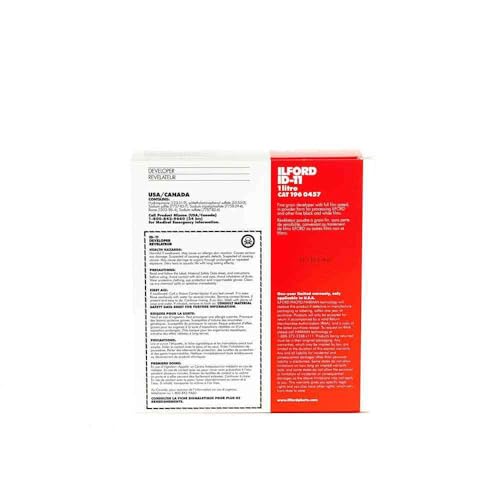
Ilford ID-11 is a versatile, powder-based developer with fine-grain characteristics. Two packs help ensure long shelf life and economical processing for large volumes. It is well-suited for a range of general-grade blacks and whites, enabling fine grain and consistent development without sacrificing speed. This system supports replenishment options, making it practical for studios that process many rolls.
Kodak Professional T-Max Black & White Film Developer

Kodak T-Max is a liquid developer designed for high-quality shadow detail, especially with roll films. It is intended for normal or push processing and suits a workflow that prioritizes crisp tonal separation and deep highlight handling. The five-liter format makes it an economical choice for larger volumes or frequent development cycles, offering consistent results across multiple batches when prepared properly.
Buying Guide: Key Considerations For Choosing A Black And White Film Developer
- Film type and grain control: powders like D-76 and ID-11 provide classic, predictable grain with adjustable dilution, while XTOL emphasizes sharp tonal transitions at broader speed ranges. For ultra-fine grain, consider replenishment options or alternative developers designed for fine-grain results.
- Mixing method and convenience: powder developers require accurate mixing and temperature control, while liquid developers offer quicker setup and consistent emulsions. MONOBATHs are fastest but may trade some tonal nuance for speed.
- Temperature tolerance and processing flexibility: a developer that performs well across different temperatures offers more latitude in non-laboratory environments. XTOL and certain replenishable systems can maintain stability across ranges with careful dilution.
- Volume and cost efficiency: large-volume formats (5 liters) reduce per-roll costs and suit studios processing many rolls weekly. Powder systems may have longer shelf life if kept dry and properly stored.
- Film compatibility and archival goals: check compatibility with film brands and emulsions. Some developers excel with modern fast films, others with classic emulsions requiring careful agitation schedules to minimize grain irregularities.
- Storage and shelf life: two-packs of powder formulations often extend shelf life, while opened bottles of liquid developers should be used within recommended timeframes to prevent image quality degradation.
- Replenishment options: for high-volume processing, consider replenisher-compatible systems to maintain consistent density and contrast across longer runs.
In practice, selecting a developer involves aligning your workflow with your aesthetic goals—whether you prioritize ultra-fine grain, broad tonal range, or speed. For beginners, starting with a well-documented powder system like ID-11 or D-76 and testing with a few films can establish a reliable baseline. For advanced users seeking high emulsion speed and contrast, XTOL or T-Max may offer the desired performance.
Note: The product links above direct to Amazon product pages for convenience and cross-brand comparison. Always follow the manufacturer’s mixing instructions and safety data when handling chemical developers. Ensure proper ventilation and protective gear during handling and development processes.