Best Backlight for Scanning Slides and Negatives for Easy Digital Archives
Answer: A backlight for scanning slides is a compact, ultra-thin light pad that provides even, bright illumination to convert physical slides and negatives into high-quality digital images. The right backlight makes it easier to capture true color, reduce glare, and speed up your digitizing workflow. This guide highlights five top options and explains who each one is best for, with practical buying tips for photographers, hobbyists, and educators alike.
Product Snapshot: Top Picks At a Glance
| Product | Best For | Highlights |
|---|---|---|
| Photomyne A7 Mini Light Pad | Ultra-portable scanning on the go | 3500 lux brightness; ultra-thin, compact; supports slides and film negatives |
| Photomyne A4 Slide Viewer | All-purpose backlight with tracing use | Large surface; great for multi-image scanning; versatile tracing capability |
| Eyesen Slide Viewer Light Box (OIXXAF) | Adjustable brightness with magnets | 0.2″ ultra-thin; magnetic slide fixtures; three brightness levels |
| Slide Viewer Light Box 5600K (JHFart) | Color-accurate backlight for slides | CRi around 95; 5600K; flicker-free; high brightness |
| DigitPro Slide & Negative Viewer | Magnet-assisted handling of curled film | 4 magnets; 3-level dimmable; dedicated scanning app |
Photomyne A7 Mini Light Pad Backlight

The Photomyne A7 Mini Light Pad is a compact, portable backlight designed for slides and negatives. It emphasizes portability for travelers, students, and field researchers who want reliable illumination without bulk. The device emits bright, uniform light suited for digitizing small slides and film strips. It is best for: on-the-go digitization, quick scans in tight spaces, and budget-conscious setups that prioritize portability over large working surfaces. Caution: its small size may limit scanning multiple slides side-by-side at once.
Photomyne A4 Slide Viewer

The Photomyne A4 Slide Viewer offers a larger surface for backlighting slides and film negatives, enabling easier alignment and multi-image capture. It’s well-suited for educators, scrapbookers, and small studios that need a versatile backlight for viewing, tracing, and digitizing. The device also supports tracing use, making it a good all-purpose light pad for drawing and calligraphy in addition to scanning. A limitation to note is that its size prioritizes a larger area over extreme portability.
Eyesen Slide Viewer Light Box (OIXXAF)

The Eyesen Slide Viewer Light Box emphasizes magnetic ease-of-use and adjustable brightness. It features a slightly larger than A4 viewing area and built-in magnets to hold slides and negatives flat during scanning. This model is best for: users who handle curled or delicate film, need quick brightness adjustments, and want a slim, light footprint. A potential drawback is reliance on magnet placement for flattening; some very curled film may still need manual flattening before scanning.
JHFart Slide Viewer Light Box

The JHFart Slide Viewer Light Box provides a color-accurate backlight with a 5600K color temperature, high CRI, and flicker-free operation. It’s best for: photographers and digital archivists who need natural color rendition, especially when capturing slides for prints or precise color restoration. Its strong points include a large, even light area and stable performance; a caveat is the need to manage heat for long scanning sessions in warmer environments.
DigitPro Slide & Negative Viewer
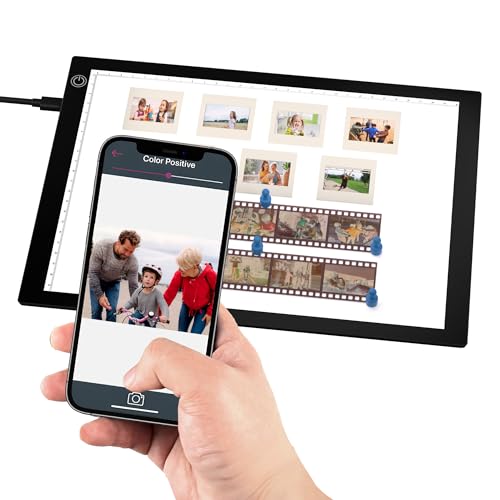
The DigitPro model features four magnets for curled negatives and a three-level dimmable backlight with a true-color LED. It’s best for: users who digitize curling film stock, need rapid, multi-image scanning, and want an integrated app to streamline the process. It includes a dedicated scanning app that pairs with SlideScan or FilmBox for efficient image capture and editing. Limitation: relying on an app can add a setup step for users who prefer native camera workflows.
Buying Guide: Key Considerations For Your Backlight Choice
What size is ideal? If you primarily scan single slides or small negatives, a compact light pad like the Photomyne A7 Mini is ideal. For batch scanning or viewing multiple images at once, a larger A4-sized viewer provides more flexibility. What brightness level do you need? Look for models with adjustable brightness to accommodate different slide tones and film conditions. If color accuracy matters, prioritize higher color rendering index (CRI) and a daylight-balanced color temperature around 5600K. Is portability important? Portable, ultra-thin backlights are easier to transport for field use or backpack setups, but may sacrifice some surface area. Do you want built-in mounting or magnets? Magnets help hold slides and negatives flat, speeding up scanning with curled media. Are there companion apps? Some models include scanning apps that streamline capture, cropping, and saving; consider your preferred workflow and whether app integration is essential. What is your power source? USB-powered pads are common and convenient, especially for on-the-go use with laptops or power banks.
Frequently Asked Questions
- What is the main purpose of a slide backlight? To provide even, bright illumination that reveals true colors and details when scanning slides and negatives, improving digital captures.
- Should I choose a larger or smaller backlight? Choose based on your typical media size and scanning volume. Smaller pads are portable; larger pads offer more working surface for batch scanning.
- Do backlights affect color accuracy? Yes. Look for daylight-balanced LEDs and high CRI to preserve authentic tones during digitization.
- Are magnets useful for film scanning? Yes. Magnets help flatten curled negatives, making it easier to capture sharp, evenly lit images.
- Do I need a separate app to scan slides? Some models include with-app scanning tools; others work with standard camera apps. Consider your preferred workflow and whether app features are important to you.
- Is USB power sufficient for long sessions? USB power is common and convenient, but ensure your setup can supply stable power for extended use, especially with higher brightness settings.