Best Beginner Astrophotography Cameras for Newbies
Choosing a first astrophotography camera can be challenging. This guide spotlights affordable, beginner-friendly options that capture Moon, planets, and wide-field targets with real-time video and stills. Each pick emphasizes plug-and-play setup, compatibility with common telescopes, and easy software integration. Below is a quick summary of the selected products to help you compare at a glance.
| Product | Brand | Sensor/Camera Type | Key Benefit |
|---|---|---|---|
| SV105 Telescope Camera | SVBONY | IMX307 color CMOS | Simple, beginner-friendly eyepiece camera |
| SV205 Astrophotography Camera | SVBONY | IMX415 7.05MP CMOS | Higher resolution, smooth real-time video |
| SV305C Astrophotography Camera | SVBONY | IMX662 2.1MP | Low noise, good for planetary and EAA |
| SV305C Pro Telescope Camera | SVBONY | IMX662 2MP | High speed USB 3.0, clear planetary imaging |
| FIBONAX 1.25” Telescope Camera | FIBONAX | 2MP 1080P | Lightweight, plug-and-play with IR filter |
SVBONY SV105 Telescope Camera
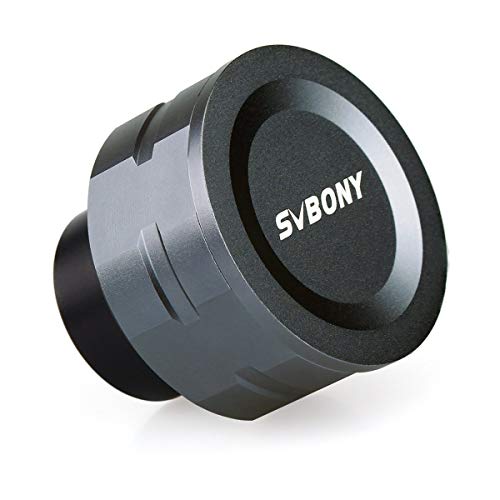
The SV105 is an entry-level electronic eyepiece designed for lunar and planetary imaging. It allows beginners to record quick videos and transfer live telescope views to a laptop or PC. The device supports plug-and-play use with compatible software on Windows (Sharpcap Capture) or Linux (AstroDMx Capture), and Android via USB Camera apps. Its compact, 1.25-inch form factor makes it easy to mount on standard telescopes for straightforward, immediate practice with planetary targets and Moon photography.
SVBONY SV205 Astrophotography Camera
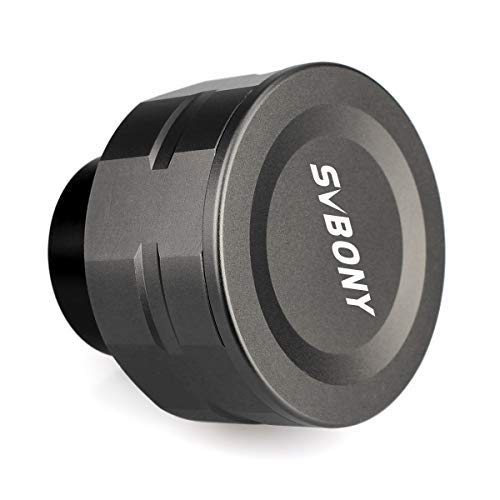
The SV205 adds higher resolution and real-time dynamic observation with a crystal-clear image. It supports MJPG video up to 2K resolution at 30 FPS and offers YUV uncompressed formats for flexible capture. Its color sensor and low-light performance help beginners document bright planets, the Moon, and terrestrial targets, enabling quick sharing with friends and astronomy communities through a connected computer. USB 3.0 connectivity enhances transfer speed and workflow efficiency during sessions.
SVBONY SV305C Astrophotography Camera

The SV305C uses the IMX662 sensor to deliver improved light sensitivity and reduced noise, making it well-suited for planetary and lunar imaging as well as Electronics-Assisted Astronomy (EAA). Its 1.25-inch form factor is compatible with common eyepiece setups, and the back-illuminated sensor design helps beginners capture clearer images in low light. This camera emphasizes minimal noise and reliable performance for quick, beginner-friendly imaging sessions.
SVBONY SV305C Pro Telescope Camera

The SV305C Pro expands on the standard model with high-speed USB 3.0 transmission and a larger 128MB DDR buffer. It maintains the low-noise, high-sensitivity advantages of the IMX662 sensor, enabling sharper planetary details at higher frame rates (up to 107 FPS at 1080p). This model suits more serious beginner sessions where crisp, continuous video capture is desirable for sharing and stacking practice.
FIBONAX 1.25” Telescope Camera

The FIBONAX 1.25″ camera is a lightweight, plug-and-play option for astronomy beginners. It provides 1080P HD imaging with a 2MP sensor and an removable IR filter to reduce light pollution and protect the sensor. The aluminum body offers improved thermal management, helping to maintain stable image quality during longer sessions. This camera is designed to be a straightforward upgrade from traditional eyepieces, capturing planets and lunar scenes with ease.
Buying Guide: Key Purchase Considerations
- Sensor quality and resolution: Look for sensors that balance planetary detail with manageable data sizes. IMX662 and IMX415 variants offer good performance for beginners.
- Interface and compatibility: USB 2.0/3.0 support and software compatibility with common capture programs (Sharpcap, AstroDMx) ease the learning curve.
- Frame rate and video formats: Higher frame rates (60–107 FPS) at 1080p help freeze planet details and reduce motion blur; MJPG and YUV formats offer flexible workflows.
- Noise and low-light performance: Back-illuminated sensors and built-in low-noise features improve usability in dim skies and with faint targets.
- Mount compatibility: 1.25-inch eyepiece compatibility is common; ensure adapters or mounts fit your telescope model.
- Software and learning resources: Availability of guides, community tips, and straightforward setup helps beginners progress quickly.
- Portability and setup time: Lightweight designs and plug-and-play operation reduce the barrier to starting sessions.
When selecting a beginner camera, consider your goals—planetary detail, lunar imaging, or wide-field EAA—and your telescope configuration. The models above emphasize ease of use, reasonable price, and reliable performance, helping new astrophotographers build skills without complex gear.