Best 70-200mm Telephoto Zoom Lenses for Every Need
Choosing a 70-200mm lens means balancing speed, weight, and versatility. The 70-200mm range covers portraits, sports, and wildlife, making it a workhorse for many photographers. This guide highlights five top telephoto zooms across Canon, Nikon, Sony, and Sigma that deliver fast autofocus, sharp images, and reliable stabilization for both stills and video. Each lens is linked to its Amazon listing for convenience, and the options span professional native mounts and adaptable choices for legacy systems.
Use this table to compare essentials at a glance, then read deeper into what each lens brings to portraits, events, and action shots.
| Product | Brand | Mount / Notes | Max Aperture |
|---|---|---|---|
| Canon RF 70-200mm F2.8 L IS USM | Canon | RF Mount | f/2.8 |
| Canon EF 70-200mm F/2.8L IS III USM | Canon | EF Mount | f/2.8 |
| Nikon NIKKOR Z 70-200mm f/2.8 S | Nikon | Z Mount | f/2.8 |
| Sony FE 70-200mm F2.8 GM OSS II | Sony | FE Mount | f/2.8 |
| Sigma 70-200mm F2.8 DG DN OS For Sony | Sigma | Sony E-Mount / L-Mount | f/2.8 |
Canon RF 70-200mm F2.8 L IS USM

- High image quality with a bright constant f/2.8 aperture for a telephoto zoom RF L lens.
- Compact and lightweight design relative to prior generations in its class.
- Optical image stabilization with up to 5 stops of shake correction for handheld shooting.
The RF version is optimized for Canon’s EOS R series, delivering edge-to-edge sharpness and fast autofocus across the zoom range. Its stabilization helps when working without a tripod, especially in dim light or when capturing moving subjects. Photographers value the balance of performance and portability for events, portraits, and sports on Canon’s modern mirrorless bodies.
Canon EF 70-200mm f/2.8L IS III USM
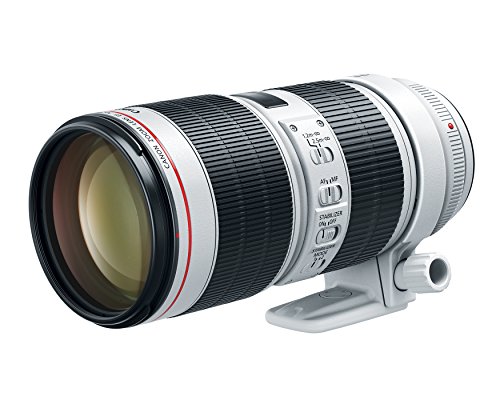
- Constant f/2.8 maximum aperture throughout entire zoom range.
- Canon’s Air Sphere Coating (ASC) minimizes ghosting and flare.
- Optical Image Stabilization up to 3.5 stops of shake correction.
This Canon EF III USM model remains a staple for full-frame DSLR enthusiasts who need reliable performance across a broad focal range. It excels in wedding, sports, and studio settings, offering strong contrast, smooth bokeh, and resilient AF tracking. While heavier than some mirrorless options, its optical quality remains a benchmark for Canon’s pro-grade telephoto zooms.
Canon EF 70-200mm f/2.8L II USM
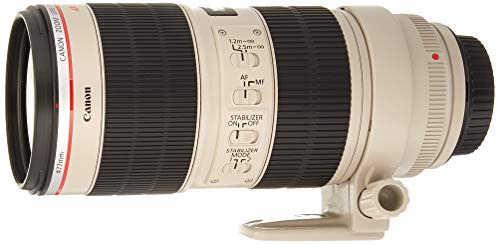
- 70-200 mm focal length with a 1:2.8 maximum aperture.
- 23 elements in 19 groups, including fluorite and UD elements for sharpness.
- 34-Degree to 12-Degree diagonal angle of view for versatile framing.
This older but highly regarded Canon L-series optic is favored by photographers who shoot with DSLR bodies and want robust performance with a proven optical formula. Its weather sealing and consistent performance across the zoom range make it a dependable choice for portraits, sports, and travel photography, especially when used with corresponding telephoto bodies.
Nikon NIKKOR Z 70-200mm f/2.8 S

- At 70mm, focus can be achieved as close as 0.5 m from the subject.
- 77 mm filter thread and versatile control options for exciting customization.
- Professional build with reliable autofocus and rendering across the zoom range.
Nikon’s Z-mount 70-200mm f/2.8 S delivers strong resolution, subject isolation, and consistent performance for Z-series mirrorless cameras. It’s well suited for portraits, weddings, and action when fast AF and superb color rendition are essential. The updated optical design helps reduce aberrations across the frame for crisp edge-to-edge visuals.
Sigma 70-200mm F2.8 DG DN OS For Sony

- Available for Sony E-mount & L-Mount, enabling cross-system flexibility.
- High-response Linear Actuator (HLA) AF motor for quick, precise focusing.
- Dust and splash-resistant structure for challenging shooting conditions.
The Sigma DG DN OS telephoto zoom combines modern optical design with practical build quality suitable for both Still photography and video work. Its OS helps stabilize shots at longer focal lengths, and the lens is designed to perform well in shared color science across Sony bodies. This makes it a compelling option for Sony shooters seeking a fast, reliable zoom without sacrificing image quality.
Buying Guide
Key considerations help determine which 70-200mm lens best fits your work style and camera system. The following perspectives cover mount compatibility, aperture choices, stabilization, and overall value.
- Mount compatibility and future-proofing: Native mounts (Canon RF, Nikon Z, Sony FE) offer the best autofocus performance and compatibility with lens profiles and in-body stabilization. DSLR-era EF and older lenses can work with adapters, but expect potential trade-offs in autofocus speed and size.
- Constant f/2.8 versus f/4 options: A constant f/2.8 provides brighter exposure in low light and shallower depth of field, which is ideal for portraits and events. F/4 lenses are typically lighter, cheaper, and more compact, well-suited for travel or multi-lens kits where weight matters.
- Image stabilization: In-lens OS (Canon L, Nikon S) or OSS (Sony GM) helps with handheld shooting, particularly at 200mm. Consider lens-to-body stabilization combinations and how you plan to shoot in low light or without a tripod.
- Autofocus performance and subject tracking: Telephoto zooms benefit from fast AF and good tracking for action, sports, and wildlife. Look for lenses with advanced focus motors and well-regarded image stabilization to keep subjects sharp across the zoom range.
- Weight, balance, and handling: The 70-200mm f/2.8 class is generally heavier. If you shoot handheld for extended periods, assess grip, balance with your camera body, and whether a monopod or gimbal is needed for video work.
- Usage scenario and budget: Professionals often prioritize speed, durability, and optical quality over price. For hobbyists or occasional shooters, a f/2.8 option may be overkill compared with a lighter, more affordable f/4 alternative.
In practice, buyers weighing modern mirrorless options from Canon, Nikon, Sony, and Sigma should consider the system they already own, the subjects they shoot most often, and whether they prefer to prioritize maximum speed, image stabilization, or overall lens weight. The five lenses highlighted here balance speed, sharpness, and flexibility for a wide range of shooting scenarios, from studio portraits to outdoor sports.