Best 70-200mm F2.8 Zoom Lenses for Sony, Canon, Nikon
Answering the buyer’s search: this guide highlights top 70-200mm f/2.8 zoom lenses across major brands, focusing on practical use cases for wildlife, sports, portraiture, and event photography. Each pick is chosen for image quality, autofocus performance, and build reliability. This article helps you compare options by mount, weight, stabilization, and optical design, so you can select the best lens for your camera system and shooting style.
| Product | Brand | Mount | Key Strength |
|---|---|---|---|
| Sigma 70-200mm F2.8 DG DN OS for Sony | Sigma | Sony E-mount / L-Mount | OS stability, fast HLA AF, rugged weather sealing |
| Nikon NIKKOR Z 70-200mm f/2.8 S II | Nikon | Nikon Z | Lightweight, internal zoom, swift AF |
| Canon RF70-200mm F2.8 L IS USM | Canon | Canon RF | Bright, compact form with strong IS |
| Sony FE 70-200mm f/2.8 GM OSS | Sony | Sony E-mount | G Master sharpness, superb bokeh, reliable AF |
| Canon EF 70-200mm f/2.8L IS III USM | Canon | Canon EF | Consistent performance, robust stabilization |
Sigma 70-200mm F2.8 DG DN OS for Sony

The Sigma option is available for Sony E-mount and L-Mount. It features a High-response Linear Actuator (HLA) AF motor for quick focus and a dust and splash-resistant structure for demanding environments. Best for Sony shooters who want fast autofocus, weather resistance, and stabilization in a single, versatile telephoto zoom.
Best for: Sony users who need robust image quality with reliable autofocus and weather sealing. Consider this if you shoot events outdoors or rely on stabilization to shoot at slower shutter speeds.
Caution: If you primarily shoot on a Canon or Nikon body, this mount won’t apply without an adapter, which can affect weight and balance.
Nikon NIKKOR Z 70-200mm f/2.8 S II
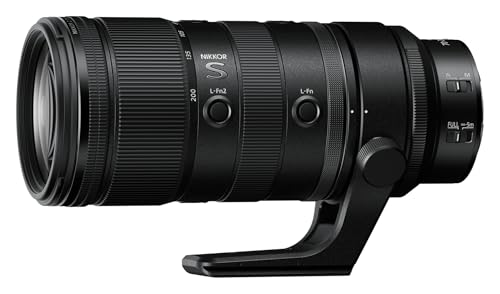
Nikon’s Z-mount 70-200mm f/2.8 S II is described as the lightest in its class, thanks to a streamlined optical design and thinner elements. It uses internal zoom for balanced handling and features a fast, quiet autofocus system (SSVCM) with high precision. This lens is ideal for Nikon Z users who prioritize portability without sacrificing performance.
Best for: Nikon shooters who want a lighter, highly capable professional telephoto zoom with strong AF performance. Choose this if you frequently use gimbals or matte boxes, and need stable balance during zooming. Caution: weight reduction can affect perceived rigidity compared with older, bulkier designs.
Canon RF70-200mm F2.8 L IS USM

Canon’s RF 70-200mm f/2.8 L IS USM delivers high image quality with a bright f/2.8 aperture and robust stabilization (up to 5 stops). Its compact, lightweight design for an RF telephoto zoom makes it suitable for outdoor events, portraits, and sports where weight matters. It’s well-suited to Canon EOS R-series cameras and larger bodies alike.
Best for: Canon RF users seeking a balance of brightness, stabilization, and portability. Choose this if you shoot in variable lighting or require reliable IS for handheld work. Limitation: as an RF-native lens, it may require adapters for non-RF bodies, though not typically needed for most Canon shooters.
Sony FE 70-200mm f/2.8 GM OSS

Sony’s G Master lens is renowned for sharpness and smooth bokeh, with a constant f/2.8 aperture and OSS stabilization. It features a dual floating focus system, specialized elements (XA, ED/Super ED) and coated optics for high resolution and contrast. This lens excels for portraiture, sports, and video work where precise AF and quality are critical.
Best for: Sony shooters who demand top-tier sharpness and excellent background blur, especially in professional video or fast-moving scenes. Choose this if autofocus speed and image fidelity are the priority. Caution: this is a heavier, premium option compared to some rivals.
Canon EF 70-200mm f/2.8L IS III USM

Canon’s EF 70-200mm f/2.8L IS III USM offers constant f/2.8 brightness with up to 3.5 stops of stabilization. It uses Air Sphere Coating to minimize ghosting and flare, delivering reliable performance in bright sun or challenging backlight. This lens remains a strong choice for Canon DSLR users needing dependable pairing with older bodies or budget-conscious professionals who still rely on EF mounts.
Best for: Canon DSLR shooters who want proven performance with strong IS and weather resilience. Consider this if you’re maintaining an EF system. Caution: newer RF bodies may offer lighter, more compact options, though this lens remains highly capable on compatible bodies.
Nikon 70-200mm f/2.8G ED-IF AF-S VR Zoom Nikkor

Nikon’s 70-200mm f/2.8G offers a fast constant aperture with VR stabilization. The lens design emphasizes robust construction and reliable performance across the focal range, making it a popular choice for professionals who shoot in variable conditions. It maintains a constant f/2.8 and supports fast AF with Vibration Reduction for steadier handheld shots.
Best for: Nikon DSLR users who require a dependable, professional-grade telephoto zoom with strong VR. Choose this if you value a well-balanced lens that performs across sports, wildlife, and events. Caution: uses a heavier build, which may affect handling on smaller camera bodies.
Buying Guide: Key Considerations for 70-200mm f/2.8 Lenses
- Mount compatibility: Ensure the lens matches your camera system (Sony E, Canon RF/EF, Nikon Z/DSLR). Some lenses offer multiple mount options, while others are fixed to one system.
- Weight and balance: Telephoto zooms are heavy. Consider a lighter option if you frequently shoot handheld or on gimbals.
- Aperture and stabilization: A constant f/2.8 is ideal for background blur and faster shutter speeds. Optical or sensor-based IS/OSS helps stabilize at longer focal lengths.
- Autofocus performance: Fast, accurate AF is crucial for sports and wildlife. Look for lenses with fast motors and advanced focusing systems.
- Build and weather sealing: Dust and splash resistance is valuable for outdoor use. Check for rubber gaskets and sealed seams.
- Image quality: Consider lens elements, coatings, and optical design. Some lenses optimize sharpness in the center, others improve edge-to-edge performance.
- Usage scenarios: For portraits, prioritize smooth bokeh; for sports, prioritize AF speed; for travel, weight and size matter.
Frequently Asked Questions
- What is the advantage of a constant f/2.8 on a 70-200mm lens?
- Do I need image stabilization on a 70-200mm f/2.8?
- Are there compatibility considerations when choosing a 70-200mm lens?
- Which 70-200mm f/2.8 lens is best for travel?
- How does weather sealing affect a lens’s reliability?
A constant f/2.8 maintains consistent exposure and depth of field across the entire zoom range, which is beneficial for low-light shooting and subject isolation.
IS/OSS helps compensate for camera shake at longer focal lengths, enabling sharper handheld shots, especially in low light or with slower shutter speeds.
Yes. Some lenses are designed for specific mounts (Canon EF/RF, Nikon F/Z, Sony E). Adapters may be required for cross-mount use, potentially impacting autofocus performance and balance.
Look for a combination of weight, stabilization, and image quality. The Nikon Z II and Canon RF options are notably lightweight and compact within their class, while Sony GM offers top-tier sharpness if weight is less of a concern.
Weather sealing helps protect internal components from dust and moisture, increasing durability in challenging environments and extended shooting sessions.