Best 70-200mm F/2.8 Lenses for All Major Camera Brands
High-speed 70-200mm f/2.8 zooms remain the standard for sports, portraits, weddings, and wildlife, delivering bright performance and flexible framing. This guide highlights five top options across Nikon, Canon, Sony, and Sigma, chosen for solid sharpness, reliable autofocus, and robust construction. Each model links to its Amazon listing to help you compare availability and value. Use the handy summary table below for a quick snapshot, then explore detailed sections that cover performance, handling, and scenarios.
| Brand | Model | Focal Range | Aperture | Notable Feature |
|---|---|---|---|---|
| Nikon | NIKKOR Z 70-200mm f/2.8 S | 70-200mm | f/2.8 | Close focus at 70mm; Customizable controls |
| Canon | EF 70-200mm f/2.8L IS III USM | 70-200mm | f/2.8 | ASC coating; IS up to 3.5 stops |
| Sony | FE 70-200mm f/2.8 GM OSS | 70-200mm | f/2.8 | G Master sharpness; fast AF |
| Canon | EF 70-200mm f/2.8L IS II USM Renewed | 70-200mm | f/2.8 | 23 elements in 19 groups |
| Sigma | 70-200mm F2.8 DG DN OS for Sony | 70-200mm | f/2.8 | OS in a compact body |
Nikon Z 70-200mm f/2.8 S Telephoto Zoom

Designed for Nikon’s Z-series mirrorless cameras, the NIKKOR Z 70-200mm f/2.8 S delivers a constant f/2.8 across the zoom range. This makes it ideal for portraits and events, providing strong subject isolation and consistent exposure as light changes. At 70mm, it can focus as close as 0.5 meters, offering versatile framing without compromising distance to the subject. It uses a 77mm filter thread and provides customizable Function buttons and a control ring for quick in-shoot adjustments.
In everyday use, this lens emphasizes sharpness and color consistency across the frame, with smooth bloom and controlled contrast suitable for high-activity environments. The build aims to balance professional handling with a more compact, travel-friendly profile for long shoots. Autofocus is designed to be responsive, keeping pace with action while preserving bokeh quality that helps subject separation in dynamic scenes.
Ideal use cases include weddings, sports, and street photography where fast, accurate focus and reliable exposure are essential. The lens integrates well with Nikon’s Z bodies, offering seamless metering, exposure, and focus controls that photographers rely on during fast-changing performances. For those who shoot in variable weather, its robust design also supports outdoor sessions without sacrificing image quality.
Canon EF 70-200mm f/2.8L IS III USM
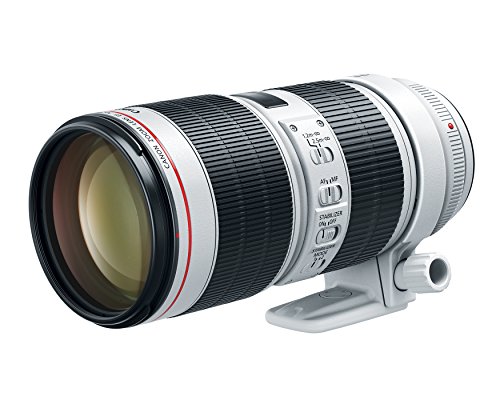
Constant f/2.8 throughout the zoom range makes the Canon EF 70-200mm f/2.8L IS III USM a staple for sports, weddings, and wildlife. Its Optical Image Stabilization can compensate up to several stops, helping keep shots sharp in low light or when panning. Canon’s Air Sphere Coating (ASC) minimizes ghosting and flare, preserving contrast in challenging lighting. The build balances weight and weather resistance for professional on-location use, ensuring reliable performance when time is critical.
In field use, this lens excels at fast action thanks to dependable autofocus and strong IS. The constant aperture maintains exposure continuity when tracking moving subjects, while the optics deliver sharp, high-contrast results from edge to edge. The combination of durability, image fidelity, and consistent performance has made this model a go-to choice for Canon shooters who demand pro-level results in a variety of settings.
Sony FE 70-200mm f/2.8 GM OSS

G Master design combines extraordinary sharpness and smooth bokeh, with a constant f/2.8 maximum aperture to maintain exposure and depth of field across the zoom range. The lens weighs 1,480 g (without the tripod mount) and offers a class-leading minimum focus distance of 37.8 inches with a 0.25x maximum magnification, enabling close‑up portraits and environmental shots. A dual floating focus system delivers high AF speed and precision, while XA, ED/Super ED elements and Nano AR coatings enhance resolution and contrast.
Video performers will notice minimal focus breathing and a practical par-focal design, making it well-suited for run-and-gun projects. The lens’s direct coupled mechanical focus system supports precise manual focus, which helps when pulling focus during live events. Its OSS stabilization works in tandem with Sony bodies to deliver steadier footage and crisp stills even in dim venues or during handheld pans.
Canon EF 70-200mm f/2.8L IS II USM Renewed
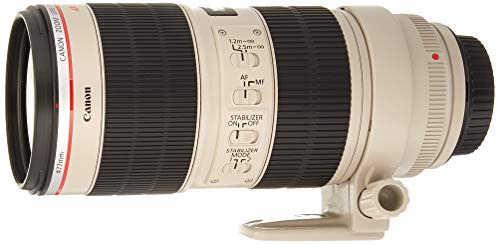
Canon EF 70-200mm f/2.8L IS II USM Renewed offers the familiar telephoto workhorse feel with a constant f/2.8 aperture and robust optical performance. The lens is built around a dense element layout (23 elements in 19 groups), including fluorite and UD elements to minimize chromatic aberration and preserve edge-to-edge sharpness across the frame. The 34-degree diagonal field of view provides flexible composition for portraits, events, and sports, while the IS system helps stabilize handheld shots in variable light.
For budget-conscious buyers, the renewed option provides a practical route to pro-grade optics without a new-lens price. The lens’s reputation for sharp rendering and reliable balance continues to serve Canon shooters well, especially for those upgrading from consumer glass or returning to Canon’s older EF lineup. This model remains a strong value choice for those prioritizing optical quality and long-term depreciation.
Sigma 70-200mm F2.8 DG DN OS for Sony

The Sigma 70-200mm F2.8 DG DN OS is designed for Sony E-mount (and L-Mount) bodies, delivering fast, accurate autofocus with a high-response Linear AF motor. Optical Stabilization (OS) helps keep handheld shots clean at longer focal lengths, while a dust- and splash-resistant structure supports demanding outdoor work. The lens emphasizes a balanced, compact design that combines portability with pro-level optics, making it a compelling alternative to native options for Sony shooters seeking value and flexibility.
In practice, this lens suits event photography, portrait work, and travel where reliable stabilization and fast focusing matter. Its OS and well-controlled aberrations produce clean, vibrant images with minimal color fringing, and the compact form helps reduce fatigue during long shoots. For photographers exploring system versatility, the Sigma option offers a robust, cost-effective path without sacrificing core performance.
Buying Guide
System compatibility and mounts
Consider whether you shoot on Nikon Z, Canon EF/EF-S, Sony E, or another mount. Native EF, Z, or Sony lenses typically deliver the best autofocus behavior, stabilization performance, and metering accuracy with their corresponding camera bodies. If you own multiple systems, you may explore third‑party options like Sigma that offer cross‑mount compatibility but may require adapters for some body types. Always confirm compatibility with your specific camera model and firmware version before buying.
Focal range, aperture, and usage scenarios
A constant f/2.8 across 70-200mm remains ideal for low‑light sports, events, and portraits with a shallow depth of field. Evaluate whether you need the full zoom range for wildlife, action, or studio work. In tight spaces, the 70-200mm range offers flexibility for framing a subject at varying distances. If bulk and weight are concerns, some brands offer lighter designs or newer, more compact variants. Your typical subject matter should guide which model fits best.
Autofocus performance and stabilization
AF speed, accuracy, and tracking ability matter most for action and event work. The presence of optical stabilization (IS/OSS/OS) helps mitigate camera shake at longer focal lengths, enabling sharper handheld shots and smoother video. Some lenses feature advanced focusing systems (dual floating focus, nano coatings, or XA elements) that improve edge-to-edge sharpness and reduce focus breathing in video. Weigh the stabilization performance against weight and handling characteristics for your shooting style.
Build quality, weather sealing, and durability
Professional use often requires rugged construction and weather sealing. Lenses designed for outdoor work typically resist dust and moisture, while heavier builds may demand tripods or monopods for extended shoots. Consider how often you travel or shoot in challenging conditions. A lens with a robust exterior, sealing around switches, and dependable focusing mechanisms will endure long-term use and retain resale value.
Price, availability, and value
New models may command higher prices, while renewed or used options offer significant savings if you’re comfortable with cosmetic wear and limited warranties. When comparing prices, factor in included accessories, warranty terms, and seller reliability. In some cases, a high-demand lens may be backordered, so assess delivery timelines and return policies to protect your investment.
Future-proofing and ecosystem considerations
Think about future camera investments. Some brands are expanding mirrorless lines while maintaining compatibility with older glass via adapters. If you plan to stay within one ecosystem, investing in native lenses can simplify calibration, autofocus behavior, and color science. For photographers who like flexibility, third‑party lenses that cover multiple mounts can provide versatility as gear needs evolve.