Best 70-200 Zoom Lenses for Professional Telephotos in 2025
Choosing the right 70-200mm zoom lens depends on your camera system, subject, and shooting style. This guide reviews five top options across Sony, Nikon, Canon, and Panasonic that balance image quality, autofocus performance, stabilization, and handling. Whether you shoot sports, portraits, or events, these lenses offer reliable performance at telephoto focal lengths while keeping size and weight in check. Each profile below includes a concise summary, key features, and what makes it suitable for different setups.
| Product | Brand | Focal Range | Aperture | Notable Feature |
|---|---|---|---|---|
| Sony FE 70-200mm F2.8 GM OSS II | Sony | 70-200mm | F2.8 | XD Linear Motors, Optical Stabilization |
| Nikon Z 70-200mm f/2.8 S | Nikon | 70-200mm | F2.8 | Close focus at 0.5m, Customizable controls |
| Canon EF 70-200mm f/2.8L II USM | Canon | 70-200mm | F2.8 | Advanced optical grouping with fluorite and UD elements |
| Nikon 70-200mm f/2.8G ED-IF VR Zoom Nikkor | Nikon | 70-200mm | F2.8 | VR image stabilization, constant F2.8 |
| Panasonic LUMIX S PRO 70-200mm F4 | Panasonic | 70-200mm | F4 | Leica certified, OIS, Dual I.S. 2 up to 6 stops |
Sony 70-200mm F2.8 GM OSS II
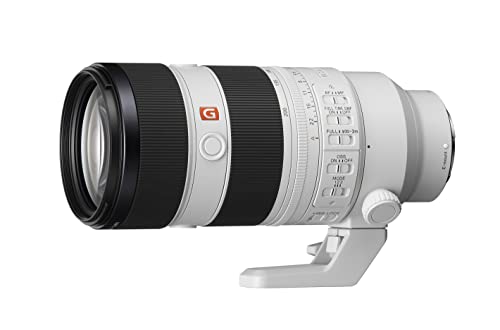
The Sony FE 70-200mm F2.8 GM OSS II is designed for professional imagers who demand high resolution across the entire zoom range. Its optical design uses two aspherical elements and one XA (extreme aspherical) element to preserve sharpness from edge to edge. Additional ED and Super ED elements minimize chromatic aberration, while Sony’s Nano AR II coating controls flare and ghosting so scenes with backlight render cleanly. Teleconverters (1.4x and 2x) are supported for extra reach, though they are sold separately. The lens is built for video too, featuring reduced focus breathing and a quiet, precise iris control with independent rings for focus, zoom, and aperture. XD Linear Motors power fast, accurate autofocus and tracking, making it a strong choice for fast action and running subjects.
Performance highlights include a robust autofocus system that maintains track on moving subjects, dependable weather sealing, and a design that minimizes focus breathing for smoother video work. The combination of a bright F2.8 aperture and effective stabilization helps when shooting in lower light or when isolating subjects at longer distances. The lens remains a popular option for Sony full-frame shooters who need reliable edge-to-edge sharpness, rich color rendering, and strong dynamic range in a telephoto zoom.
Nikon Z 70-200mm f/2.8 S

The Nikon Z 70-200mm f/2.8 S is built for professionals using Nikon’s Z-series mirrorless bodies. At 70mm, focus can reach as close as 0.5 meters, enabling strong portrait work with a shallow depth of field. The lens features a standard 77mm filter thread and includes a versatile control ring plus customizable Function buttons, allowing for quick adjustments on the fly. The optical design is tuned for excellent sharpness and contrast through the entire zoom range, with solid image quality for event photography, sports, and studio work. Its ergonomic design supports long shooting sessions with comfortable handling and reliable autofocus performance.
For video shooters, the Z 70-200mm f/2.8 S offers smooth manual focus control and predictable focus response, with a build that favors durability. While ghosting can occur in bright light, the lens generally handles flare well with careful composition. The combination of fast AF, strong stabilization in compatible bodies, and a robust feature set makes this lens a top pick for Nikon Z shooters who need a pro-level telephoto zoom.
Canon EF 70-200mm f/2.8L II USM
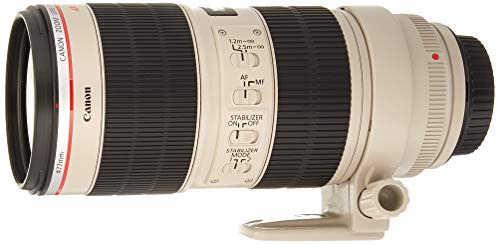
The Canon EF 70-200mm f/2.8L II USM is a classic professional option for Canon DSLR systems. The lens employs a sophisticated optical formula, with 23 elements in 19 groups, including one fluorite and five UD elements, to optimize sharpness, contrast, and color accuracy across the zoom range. Its fast, reliable USM autofocus is well suited for fast action, while the expansive 2.8 aperture supports subject isolation and performance in challenging light. The diagonal angle of view ranges from broad at 34 degrees to tighter at 12 degrees, giving photographers flexible framing choices for portraits, events, and sports.
Although newer RF-mount options exist, the EF 70-200mm f/2.8L II USM remains a trusted choice for Canon DSLR users who want enduring build quality and pro-level image characteristics. Its rugged construction and consistent results across the zoom range make it a perennial favorite among professionals and enthusiasts alike.
Canon EF 70-200mm f/4L USM

The Canon EF 70-200mm f/4L USM is a lighter alternative within the 70-200mm family, offering a fixed maximum aperture of f/4 across the zoom range. This lens is well-suited for travel and enthusiasts who want a more compact option with strong optical performance. It features a more modest price point and a straightforward optical design that delivers solid sharpness and contrast for landscapes, portraits, and events. The build aligns with Canon’s L-series standards, providing weather resistance and dependable performance in varied shooting conditions.
Nikon 70-200mm f/2.8G ED VR II

The Nikon 70-200mm f/2.8G ED VR II is a staple for Nikon DSLR shooters needing a fast telephoto zoom with reliable VR stabilization. This lens holds a constant F2.8 aperture through the entire focal range, delivering consistent exposure control and subject separation. Its robust optical design includes ED glass to reduce chromatic aberration and a fast autofocus system. The VR II stabilization helps achieve sharp shots in dim light or when photographing action. The lens may be paired with teleconverters for additional reach, expanding its versatility for sports and wildlife photography.
Panasonic LUMIX S PRO 70-200mm F4

The Panasonic LUMIX S PRO 70-200mm F4 is a high-performance telephoto zoom designed for full-frame L-mount cameras. It is LEICA-certified, ensuring premium optical quality, and includes Optical Image Stabilization tied to compatible bodies. The lens uses a 23-element, 17-group optical arrangement, featuring an aspherical element and three ED elements to minimize axial chromatic aberration and magnification errors. With 5-Axis Dual I.S. 2, it can achieve up to six stops of stabilization when paired with the right body and settings. This makes it a versatile choice for travel, portraits, and wildlife where weight and portability matter.
Buying Guide
Key purchase considerations help determine the best 70-200mm zoom lens for a given setup. The following perspectives cover essential tradeoffs and practical guidance.
- Camera system compatibility: Lenses are tied to mounts (Sony E, Nikon Z, Canon EF, Panasonic L, etc.). Match the lens to your camera body to ensure full autofocus, stabilization, and metering performance.
- Aperture and subject matter: Lenses at f/2.8 offer subject isolation in low light and faster shutter speeds, but heavier and pricier. Lenses at f/4 are lighter and more compact, with excellent sharpness, suitable for travel or daylight shooting.
- Autofocus speed and tracking: Pro telephotos rely on fast AF systems and robust tracking. Lenses with advanced motors (e.g., Sony XD, Nikon VR, Canon USM) perform better for sports and fast action.
- Stabilization: Optical stabilization (OSS, VR, L-IS) helps in low light or when using slower shutter speeds. Some bodies offer in-body stabilization that synergizes with lens IS for enhanced performance.
- Optical design and coatings: Elements like ED, UD, fluorite, and aspherical components reduce chromatic aberration and enhance corner-to-corner sharpness. Anti-reflective coatings minimize flare in bright or backlit scenes.
- Weight and handling: Telephoto zooms are often heavy. Consider balance with your camera grip, tripod compatibility, and carry comfort for long shoots.
- Versatility vs. cost: High-end f/2.8 models deliver superior performance, but cost and weight can be prohibitive. For many users, a well-chosen f/4 or a older model with solid optics can be a practical alternative.
- Future-proofing: If you plan to upgrade bodies or stay within a single ecosystem, choose a lens that remains compatible with anticipated camera systems and supports features like teleconverters or video-focused controls.
In summary, the best lens depends on your camera system, preferred working style, and the balance you want between speed, reach, and portability. High-end f/2.8 options excel in action and studio environments, while f/4 variants offer lighter builds with strong optical performance. Teleconverters can extend reach but may impact autofocus speed and image quality benefits. Evaluate your typical shooting scenarios, budget, and whether you prioritize weight, stabilization, or ultimate sharpness across the zoom range.