Telephoto zooms at 70-200mm are a go-to for sports, wildlife, portraits, and events, offering fast apertures, excellent subject isolation, and flexible framing across a single lens. This guide highlights the best 70-200mm telephoto zooms across key brands for mirrorless and DSLR buyers, focusing on constant F/2.8 options and notable alternatives to fit different ecosystems. Each lens is tied to its Amazon listing for direct comparison and quick shopping. The table below provides a snapshot of core specs and standout strengths to help you choose wisely.
| Brand | Model | Focal Length | Aperture | Strength |
|---|---|---|---|---|
| Nikon | NIKKOR Z 70-200mm f/2.8 S | 70-200mm | f/2.8 | Close focus at 70mm; Function buttons and control ring |
| Sony | FE 70-200mm F2.8 GM OSS II | 70-200mm | f/2.8 | Exceptional optics; fast AF; quiet operation |
| Canon | RF 70-200mm F2.8 L IS USM | 70-200mm | f/2.8 | High image quality; compact for an F/2.8 zoom; strong IS |
| Panasonic | LUMIX S PRO 70-200mm F2.8 | 70-200mm | f/2.8 | Leica certified; robust stabilization and optics |
| Canon | EF 70-200mm f/2.8L II USM | 70-200mm | f/2.8 | Classic pro-grade design; UD/fluorite elements for clarity |
id=”nikon-z-70-200″>Nikon NIKKOR Z 70-200mm f/2.8 S

The NIKKOR Z 70-200mm f/2.8 S offers a close focus of 0.5 meters at 70mm, enabling compelling close-up action and portrait work. It features a standard 77mm filter thread and includes customizable Function buttons along with a control ring for rapid adjustments during fast-paced shoots. Built for Nikon’s Z series, the lens is designed to deliver consistent performance across the zoom range, balancing sharpness, contrast, and subject isolation in demanding lighting conditions.
In practical terms, this lens provides flexible composition for sports, events, and portrait sessions on Nikon Z bodies. The combination of a large constant aperture and responsive controls supports indoor venues and outdoor arenas alike, helping photographers maintain shutter speed and depth of field without swapping lenses. While explicit details on weather sealing aren’t listed here, the S-line designation signals professional-grade optics and construction that align with Nikon’s high standards for wildlife and action photography.
id=”sony-70-200gm2″>Sony FE 70-200mm F2.8 GM OSS II
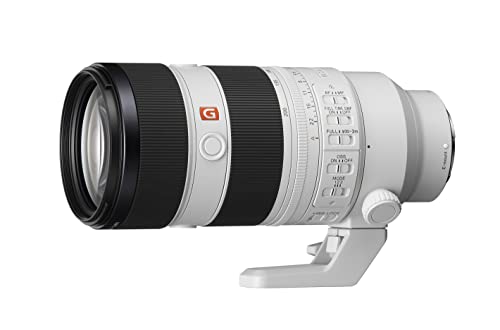
The FE 70-200mm F2.8 GM OSS II is designed for Sony’s full-frame E-mount, delivering superb image quality across the zoom range at all focusing distances. Its optical design incorporates two aspherical elements and multiple low-dispersion elements to minimize chromatic aberration, complemented by Sony’s Nano AR Coating II to suppress flare and ghosting. The lens supports optional 1.4x and 2x teleconverters for added reach, expanding versatility for wildlife and distant subjects.
Autofocus and video performance are central to this lens, with Four XD Linear Motors providing fast, precise, and quiet AF that suits both still photography and cinema work. AF tracking during zooming is improved, and the design emphasizes reduced focus breathing and axis shift for smoother shooting in dynamic scenes. Independent control rings for focus, zoom, and iris plus a click-on/off aperture switch make it a filmmaker-friendly option for hybrid shooters.
id=”canon-rf-70-200″>Canon RF 70-200mm F2.8 L IS USM

The Canon RF 70-200mm F2.8 L IS USM emphasizes high image quality with a bright F/2.8 aperture across the zoom range. It is noted for its compact and lightweight design relative to other high-end 2.8 telephotos, paired with Optical Image Stabilization offering up to 5 stops of shake reduction. The L-series badge signals professional-grade build and optical performance optimized for Canon’s EOS R system with reliable autofocus for action and portrait work.
For hybrid shooters using Canon’s RF lineup, this lens provides a balanced combination of reach, resolution, and portability, making it a strong option for event coverage, weddings, and field sports. The combination of a robust stabilization system and a bright aperture helps maintain fast shutter speeds in variable lighting, while the lens’ overall ergonomics support extended shooting sessions and accurate manual overrides when capturing decisive moments.
id=”panasonic-s-pro-70-200-2-8″>Panasonic LUMIX S PRO 70-200mm F2.8

The LUMIX S PRO 70-200mm F2.8 is a high-end telephoto zoom built for Panasonic’s L-mount full-frame system. It features Optical Image Stabilization and supports the camera body’s I.S. systems, including a 5-axis Dual I.S. 2 arrangement that enables several stops of slower shutter speeds for sharp handheld shots. The lens uses 22 elements in 17 groups, with 2 UED and 3 ED elements to suppress axial and magnification aberrations, delivering clear, contrasty images across the frame. Leica certification reinforces its professional-grade optical performance.
Designed for serious still and video work on the LUMIX S Series, this lens balances weight and solidity for event photography, sports, and nature shooting. The combination of robust optical design and advanced stabilization helps photographers maintain sharpness in challenging light or when shooting at long distances, while the native S-mount integration ensures seamless autofocus and exposure control with compatible bodies.
id=”canon-ef-70-200-ii”>Canon EF 70-200mm f/2.8L II USM
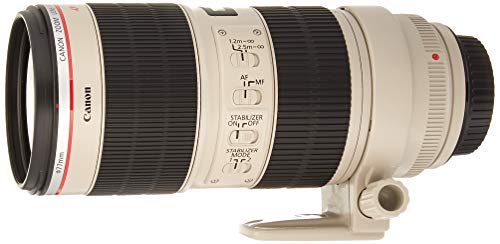
The Canon EF 70-200mm f/2.8L II USM represents a classic professional zoom with a consistent f/2.8 aperture across the 70-200mm range. It features a sophisticated optical design with 23 elements in 19 groups, including fluorite and multiple UD elements to optimize sharpness and color fidelity. This is a trusted choice for Canon DSLR shooters who require reliable performance, fast AF, and robust build quality for fieldwork and studio use alike. The renewed listing reflects a tested and certified option that looks and works like new, providing value without compromising performance.
For photographers continuing with Canon’s EOS system, this lens offers strong contrast, edge-to-edge sharpness, and reliable performance across a wide range of subjects, from portraits to action. While heavier than some modern mirrorless options, its durability and optical excellence keep it relevant for professionals who still rely on DSLR gear, or for those seeking a cost-effective path into high-quality telephoto work without the latest mirrorless features.
Buying Guide
Key purchase considerations
- System compatibility: Match the lens to your camera system (Nikon Z, Sony E, Canon RF, Panasonic L-mount, or Canon EF). Ensure autofocus, stabilization, and metering work optimally with your body.
- Constant aperture vs. variable: A constant f/2.8 provides consistent brightness across the zoom range, which is valuable for action and low-light work; alternatives at f/2.8 or f/4 offer different trade-offs in weight and price.
- Image stabilization: Evaluate lens IS alongside body stabilization. Some lenses provide up to 5 stops of correction, while others rely more on body-based stabilization or in-body stabilization features.
- Weight and balance: Pro 2.8 zooms are typically heavy. Consider how the lens will handle on your preferred camera body, including tripod collar compatibility and grip comfort.
- Optical quality and coatings: Look for elements that suppress chromatic aberration, flare, and ghosting (e.g., Nano AR coatings, ED/UD elements, fluorite variants).
- Build and weather resilience: For outdoor shooting, assess weather sealing, dust resistance, and overall durability, especially for sports or wildlife work.
- Future-proofing: If you plan to upgrade your camera system, choose a lens with a mount and compatibility that fits your long-term goals (mirrorless vs. DSLR ecosystems).
Compare by use case
- Sports and action: Prioritize fast autofocus, robust image stabilization, and a comfortable balance for long sessions.
- Wildlife: Consider reach and sharpness at distance, plus accessory compatibility like teleconverters for extended reach.
- Portraits: Look for shallow depth of field control, bokeh quality, and sharpness at the sweet spots of the zoom range.
- Travel and events: Weight, size, and handling matter; a lighter 2.8 lens with strong IS can be ideal for all-day shooting.
Brand ecosystems and compatibility notes
Choosing a lens within your existing ecosystem can simplify maintenance, service options, and future upgrades. Mirrorless options from Nikon, Sony, Canon RF, and Panasonic L-mount are progressively common and benefit from advanced AF and stabilization systems. Canon EF lenses remain a solid choice for DSLR users, with renewed listings offering value. If you anticipate switching brands, consider selling or trading plans to minimize total cost of ownership and ensure a smooth transition to a new mount with compatible telephoto performance.