Best 7 Inch Monitor for Camera: Top Picks for on-the-Go Filming
Filmmakers, vloggers, and photographers increasingly rely on compact 7 inch field monitors to improve focus, exposure, and framing. This guide highlights five standout models that balance image quality, brightness, and usability in outdoor and studio setups. Each option supports essential features like 4K HDMI input, peaking, and waveform monitoring, helping you choose a reliable companion for cameras, stabilizers, and rigs.
| Product | Key Benefit | Best For | Brightness |
|---|---|---|---|
| FEELWORLD FW759 | Slim, portable, 1280×800 display | 400 nits | |
| NEEWER F700 | 2000 nit brightness with LUTs | 2000 nits | |
| Portkeys HD7H | 1000 nit, strong exposure tools | 1000 nits | |
| LILLIPUT A7s | High contrast, 4K HDMI loop | ~500 nits | |
| NEEWER F100 | Sunshade included, solid IPS panel | 450 nits |
FEELWORLD FW759 7 Inch Monitor
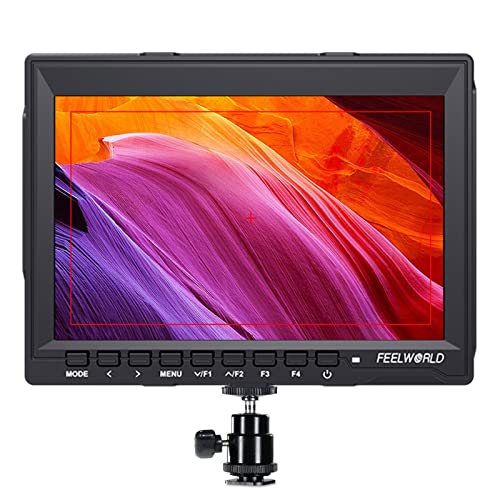
The FEELWORLD FW759 offers a compact 7-inch IPS display with a 1280×800 resolution and 400 cd/m2 brightness. Its ultra-slim profile (about 17 mm) and light weight (roughly 300 g) make it ideal for gimbals, stabilizers, and handheld rigs. It supports 4K HDMI input, with compatibility for HDMI formats up to 3840x2160p at varying frame rates, ensuring it works with most DSLRs and camcorders. Useful on-set features include peaking, image freeze, flip, and zoom to help tighten focus and composition.
FEELWORLD FW759 With Battery And Bag

This variant of the FW759 includes a bundled battery and carrying bag, expanding field usage time and portability. The monitor still delivers 1280×800 clarity with the same 4K HDMI compatibility and essential monitoring tools, making it a practical choice for on-location shoots where power and protection are concerns. Its light footprint supports dynamic shooting styles without sacrificing essential color accuracy.
Portkeys HD7H 7 Inch Field Monitor

The HD7H features a bright 1000 nit LCD and 1280×720 resolution, designed for outdoor shooting with a matte anti-glare screen and an included sun hood. It supports 4K HDMI input and offers a suite of professional tools such as luma histogram, false color, focus peaking, zoom, and anamorphic de-squeeze. The monitor also includes shortcut keys for quick access and supports up to 60 custom 3D LUTs, aiding consistent color workflows across projects.
LILLIPUT A7s 7 Inch Monitor
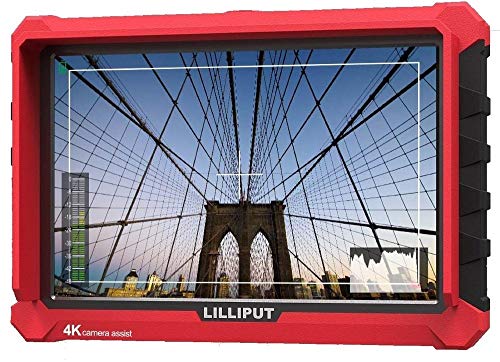
The Lilliput A7s delivers 1920×1200 resolution with 4K HDMI input and loop output, offering a high-density panel with 1000:1 contrast and 500 nits brightness. It includes camera auxiliary tools like peaking, false color, histogram, and exposure meters, along with customizable F1/F2 keys. A compact, durable form with sun shade makes it suitable for outdoor shoots and tight rigs, supporting efficient, on-the-fly adjustments.
NEEWER F100 7 Inch Field Monitor

The Neewer F100 emphasizes outdoor visibility with a 1280×800 IPS panel and a sunshade, delivering 450 nits brightness for sunlit environments. It supports a broad range of HDMI inputs up to 1080p and has a robust 17 mm ultra-thin design. The monitor includes the sunshade and a ball head for versatile mounting, making it a solid option for handheld rigs and lightweight camera setups.
Buying Guide: Key Considerations For 7 Inch Monitors
- Brightness And Outdoor Use: If you shoot outside in bright light, prioritize models rated around 1000+ nits or use a sunshade. Higher brightness helps ensure a clear image under sun glare.
- Resolution And Color Accuracy: A higher resolution (1080p or higher within 7 inches) and good color gamut lead to more accurate previews. Look for IPS panels for wide viewing angles and stable color.
- HDMI Inputs And Looping: For most cameras, 4K HDMI input is a common requirement, while loop-through can simplify multi-monitor setups on rigs or2- camera arrays.
- Monitoring Tools: Peaking, false color, histogram, waveform, and vectorscope help with exposure and focus accuracy. LUT support is a plus for matching footage to a grading workflow.
- Power And Mounting: Consider battery options, included batteries, and mounting flexibility (cold shoe, tripod, or cage) to fit your rig and shooting style.
- Build And Portability: A slim, lightweight monitor reduces fatigue on long shoots and improves balance on gimbals or steadicams.
When evaluating choices, weigh brightness against battery life, and consider whether you need additional features like LUTs, 3D LUT support, or advanced waveform tools. For basic monitoring, a compact, well-calibrated 1280×800 IPS display with essential peaking and histogram often suffices. For outdoor or daylight-heavy shoots, prioritize models with high brightness or included sun shading. Finally, confirm compatibility with your camera’s HDMI formats to ensure a smooth workflow across shooting scenarios.