Best 50Mm Prime Lenses for Sharp Portraits and Low-Light Shooting
Prime lenses with a 50mm focal length are a favorite among enthusiasts and professionals for their natural perspective, bright apertures, and compact designs. This guide highlights five top options across Canon, Nikon, and Sony that deliver strong performance in portraits, street photography, and low-light situations. Each lens emphasizes sharp imaging, smooth autofocus, and pleasing bokeh to help you capture compelling imagery in varied environments.
| Product | Brand | Focal Length / Aperture | Why It Stands Out |
|---|---|---|---|
| Canon EF 50mm f/1.8 STM | Canon | 50mm, f/1.8 | Budget-friendly option with solid sharpness and nice background blur on DSLR bodies |
| Canon RF50mm f/1.8 STM | Canon | 50mm, f/1.8 | Compact, lightweight for EOS R mirrorless cameras; smooth AF for video |
| Nikon NIKKOR Z 50mm f/1.8 S | Nikon | 50mm, f/1.8 | Premium optical performance with sharpness edge-to-edge and quiet AF |
| Sony FE 50mm F1.8 OSS | Sony | 50mm, f/1.8 | Optical SteadyShot, compact design, strong close-up performance |
| Sony FE 50mm F1.4 GM | Sony | 50mm, f/1.4 | G Master level resolution and bokeh; lightweight for a high-end prime |
Below, five selected lenses are explored in detail to help you choose the right 50mm prime for your camera system and shooting style. Each section includes a brief overview of key features and practical usage notes.
Canon EF 50mm f/1.8 STM Lens

The Canon EF 50mm f/1.8 STM delivers a classic field of view that closely resembles natural human vision. With a maximum aperture of f/1.8, it excels in low-light situations and provides a shallow depth of field for portraits. The STM motor allows for smooth and quiet AF, which is beneficial for both stills and video. Its compact build makes it a practical everyday lens for Canon DSLR bodies, with a minimum focusing distance of about 0.35 meters and a maximum magnification around 0.21x.
Canon RF50mm F1.8 STM Lens

This Canon RF50mm f/1.8 STM is designed for EOS R-series mirrorless cameras. It’s notable for its compact and lightweight footprint, plus a large f/1.8 aperture that enhances performance in low light and enables pleasing background blur. The stepping motor (STM) ensures smooth, quiet autofocus for both photos and video, making it a versatile option for creators who want portability without sacrificing image quality.
Nikon NIKKOR Z 50mm f/1.8 S

The Nikon NIKKOR Z 50mm f/1.8 S is a premium option for Z-mount mirrorless cameras. It delivers sharpness across the frame with minimal distortion, even at wide apertures. An ultra-quiet stepping motor supports silent AF during video and photography, while the lens design emphasizes color accuracy and contrast for a natural, true-to-life look in portraits and street photography.
Sony E 50mm F1.8 OSS Portrait Lens
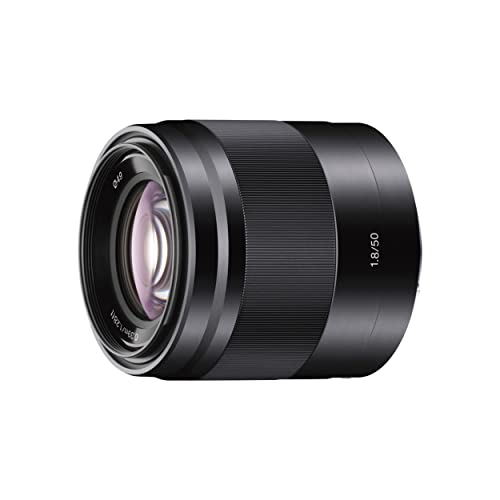
The Sony E 50mm F1.8 OSS adds optical image stabilization to a compact, lightweight design. This makes it especially appealing for handheld shooting and low-light portraits. The 1.8 aperture provides smooth background blur, and the 0.39-meter minimum focus distance offers flexible close-up work. Its 49 mm filter thread supports standard filters for creative effects or protection.
Sony FE 50mm F1.4 GM
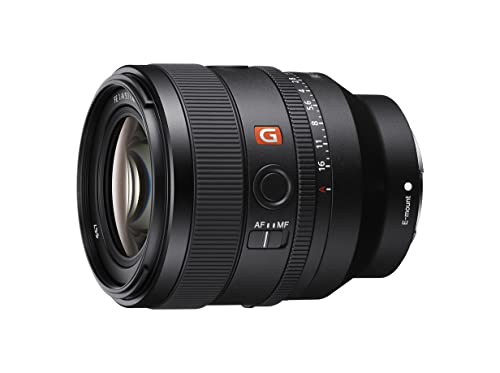
Sonys FE 50mm F1.4 GM is a high-end option that emphasizes extreme sharpness and exquisite bokeh. The G Master designation signals premium lens performance, including compactness and smart optical design. The wide aperture achieves shallow depth of field for portraits and low-light scenes, while maintaining reliable autofocus performance across shooting scenarios.
Buying Guide
Key purchase considerations for 50mm prime lenses include compatibility, weight, and autofocus behavior. A few practical factors to assess:
- Camera system compatibility: Ensure the lens mount matches your camera (Canon EF, Canon RF, Nikon Z, Sony E).
- Maximum aperture: Lenses with f/1.8 to f/1.4 excel in low light and offer distinct subject separation; consider whether you need the extra speed of f/1.4 GM models.
- Autofocus performance: Quiet, fast AF is important for action and video work; STM and advanced motors help reduce focus noise.
- Image stabilization: Lenses with OSS or equivalent stabilization help in handheld shooting, especially for video or indoor environments.
- Weight and balance: Lighter primes improve portability and handling, while heavier pro-grade options may offer better build quality and durability.
- Tripod and support needs: Evaluate the minimum focusing distance and maximum magnification to determine if you need macro-friendly capabilities.
In practice, the Canon and Nikon options cater well to their respective DSLR and mirrorless ecosystems, while Sony’s E-mount line provides compactness and strong performance across f/1.8 to f/1.4 apertures. Your choice should align with your camera system, intended subjects, and whether you prioritize portability, stabilization, or ultra-wide maximum apertures for portraits and night photography.