Best 360 Degree Video Cameras for Immersive Footage and Easy Editing
Answering the search for 360 degree video cameras, this guide highlights top choices across brands for beginners and seasoned shooters alike. The list focuses on models with strong stabilization, reliable waterproofing, and AI or software features that simplify framing after the ride. Best for action enthusiasts, vloggers, and travelers seeking fully immersive footage without complex gear. Below is a quick buyer’s summary, followed by in-depth product insights and a practical buying guide.
| Product | Best For | Key Benefit |
|---|---|---|
| Insta360 X3 | All-around creators | 5.7K 360 with reframing via AI |
| Insta360 X5 | Low-light adventures | 8K30fps 360 with triple AI chips |
| AKASO 360 Action Camera Motorcycle Combo | Adventure riders | 5.7K 360 with AI tracking |
| AKASO EK7000 | Budget seekers | 4K30fps with EIS |
| DJI Osmo 360 Essential Combo | High-end all-around | 8K 360 video and dual battery setup |
The following sections present five top picks, each with a concise description of who it’s best for, its standout features, a potential limitation, and why it fits in a 360-degree camera setup today.
Insta360 X3-360 Action Camera

The Insta360 X3 delivers 5.7K 360 capture and 4K action camera capabilities in a single device. It supports 360 Active HDR, enabling reframing after the shot via AI in the Insta360 app. This model is ideal for riders and vloggers who want flexible post-editing angles without extra gear. Best for users who value creative control and AI-assisted editing over the simplest setup. Caution: the X3’s feature set thrives with robust processing, so expect battery use to scale with high-resolution modes.
Insta360 X5 – 8K 360 Action Camera

The Insta360 X5 emphasizes low-light performance and clear 8K360 video at 30fps, supported by a triple AI chip design for advanced noise reduction and image processing. It includes an “Invisible Selfie Stick” effect to produce third-person-like footage, which is especially appealing for action sports and travel storytelling. Best for creators who regularly shoot in dim environments and want maximum image fidelity. Limitation: 8K workflows demand higher storage and computer power for editing and viewing on-device previews.
AKASO 360 Action Camera Motorcycle Combo
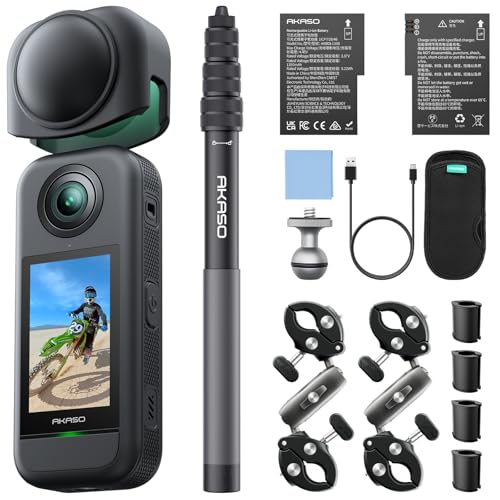
This AKASO package targets riders and outdoor enthusiasts seeking 360° capture with reliable stabilization and horizon locking. The 5.7K 360° video, 1/2″ 48MP sensors, and AI tracking support dynamic action sequences. It’s well suited for motorcyclists and adventure seekers who want AI-assisted reframing and strong post-editing options. Caution: third-party accessories and mounts may influence overall stabilization and reliability over long rides; verify compatibility before purchase.
AKASO EK7000 4K30FPS Action Camera

The AKASO EK7000 provides a budget-friendly 4K30fps action camera with EIS for steadier footage and a waterproof rating suitable for various conditions. It’s best for entry-level users who want basic 360-like versatility through standard video and potential 360-inspired effects via software. Consider this option if you’re starting out and want a simple, reliable core camera that can handle everyday adventures. Limitation: true 360-degree capture is not native and may require post-processing to simulate a full panorama.
DJI Osmo 360 Essential Combo

The DJI Osmo 360 Essential Combo combines 1-inch 360° imaging with native 8K 360 video and 4K/120fps options, plus an invisible selfie stick kit and extended battery life. This setup is ideal for creators seeking premium image quality and robust battery performance for long shoots. Best for professional-grade travel, sports, and documentary work. Caution: the high-end features come with a steeper learning curve and bulkier rig than entry-level models.
Buying Guide
What should you consider when buying a 360-degree camera? Begin with image quality and stabilization. Models like the Insta360 X5 and DJI Osmo 360 Essential offer top-tier resolution and effective stabilization, essential for rapid movement and drone-style footage. Battery life also matters; higher resolutions drain power more quickly, so plan for extra batteries or portable charging.
What’s your primary use?
For vlogging and storytelling, prioritize AI reframing, post-editing ease, and smooth stabilization. For adventure sports or riding, look for horizon-lock features, robust weather sealing, and reliable AI tracking to keep action centered.
How important is low-light performance?
Low-light capability matters for dusk scenes, tunnel runs, or night rides. Cameras with dual sensors or dedicated noise reduction chips (like the X5) perform better in dim environments.
Is 360 capture necessary, or will 360-like footage suffice?
If you truly need 360-degree capture, choose multi-sensor devices with advanced reframing, such as the X5 or DJI Osmo 360. If you’re content with immersive wide-angle footage, a standard 4K action camera with EIS (like the EK7000) can be a cost-effective option.
What about accessories and workflow?
Consider bundled kits with extra batteries, protective housings, and carrying cases. Ensure your computer and editing software can handle 8K or 5.7K footage, as workload and export times scale with resolution.
Final considerations
Stability technology, sensor quality, and AI editing capabilities drive most user satisfaction. When selecting, weigh the trade-offs between image quality, post-processing freedom, and price. The best choice aligns with your typical shooting environment and preferred editing workflow.
Frequently Asked Questions
- What is the difference between 360 and standard action cameras?
Answer: 360 cameras capture the entire scene around you, while standard action cameras capture from a fixed perspective; 360 footage allows post-edit reframing and virtual viewing angles. - Do 360 cameras require special software to edit?
Answer: Many do, especially for AI reframing and stabilization. Apps from the manufacturer or third-party editors can import 360 footage and create final videos with specific angles. - Can 360 cameras be used underwater?
Answer: Many models are waterproof or waterproof-ready with cases; verify depth ratings and use appropriate housings for underwater use. - Is higher resolution always better for 360 video?
Answer: Higher resolution offers more detail but demands more storage and processing power. Balance with editing capabilities and your playback device. - Which brand offers the best stabilization for 360 video?
Answer: High-end models with advanced AI stabilization (such as Insta360 X5 or DJI Osmo) typically provide very stable results across varied lighting and movement. - Are 360 cameras easy for beginners?
Answer: Some models include user-friendly AI features and guided editing, but the full potential comes with practice and familiarity with editing workflows.