35mm prime lenses strike a balance between broad landscapes and intimate portraits, making them a staple for street, travel, and everyday shooting. This guide highlights five highly regarded 35mm primes across Sony and Nikon systems, plus a capable third-party option. It compares aperture speed, size, autofocus performance, and optical design to help you pick a lens that fits your camera body and shooting style. Whether you shoot with a mirrorless system or a DSLR, these primes offer sharpness, pleasing bokeh, and reliable handling in real-world scenarios.
| Product | Brand | Aperture | Mount | Notable Feature |
|---|---|---|---|---|
| Sony FE 35mm F1.8 Prime Lens | Sony | F1.8 | Sony E (FE) | 9-blade circular aperture for smooth bokeh; compact and lightweight; aspherical element for high resolution |
| Sony SEL35F18 35mm F1.8 Prime | Sony | F1.8 | Sony E (APS-C) | Compact, lightweight; built-in image stabilization; sharp across the frame |
| NIKKOR Z 35mm F1.8 S | Nikon | F1.8 | Nikon Z | Extreme center-to-edge sharpness; ultra-quiet stepping motor for smooth focusing |
| NIKKOR DX 35mm F1.8G | Nikon | F1.8 | Nikon F (DX) | Lightweight and affordable; standard field of view on DX bodies |
| YONGNUO YN35mm F2N for Nikon DSLR | YONGNUO | F2 | Nikon F | AF/MF switchable; 7-blade aperture; Live View focus support |
Sony FE 35mm F1.8 Prime Lens
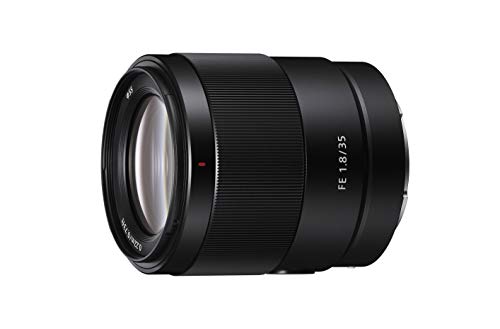
- Maximum aperture F1.8 with a 9-blade circular aperture for smooth bokeh.
- Compact and lightweight design enhances portability for travel use.
- Aspherical element helps suppress aberrations to deliver high resolution across the frame.
Sony SEL35F18 35mm F1.8 Prime
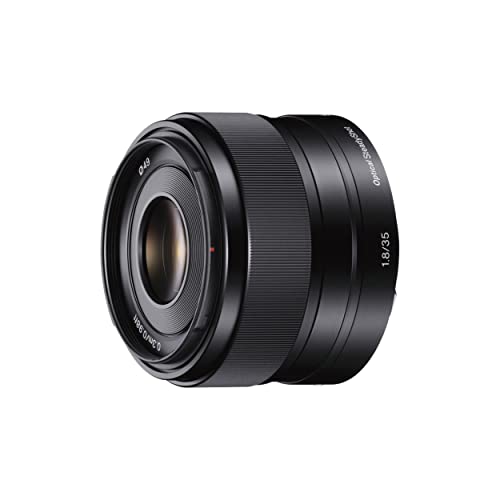
- Compact, lightweight fixed F1.8 lens with versatile 35mm field of view.
- Angle of view on APS-C about 44 degrees; close minimum focus distance of 0.99 ft (0.3 m).
- Maximum magnification about 0.15x; newer optical design supports peripheral sharpness and contrast.
- Built-in image stabilization helps when shooting handheld in lower light.
NIKKOR Z 35mm F1.8 S

- Fast 35mm prime on Nikon Z mirrorless bodies with f/1.8 maximum aperture.
- Exceptional sharpness from center to edges; silent, precise auto-focus performance.
- Designed for full-frame Z cameras with excellent color and contrast
NIKKOR DX 35mm F1.8G

- DX-format 35mm equivalent field of view on Nikon DX bodies.
- Bright F1.8 maximum aperture supports low-light shooting.
- Simple, lightweight construction suitable for travel and everyday use.
YONGNUO YN35mm F2N for Nikon

- F2 large aperture supports brighter images with a shallow depth of field.
- Auto Focus and Manual Focus modes; Live View focus assist for precise framing.
- 7-blade aperture for smoother bokeh and consistent out-of-focus areas.
- AF/MF and USB firmware upgrade options for ongoing improvements.
Buying Guide
Key factors to consider
- Camera system compatibility: Ensure the lens mount matches your body (Sony E, Nikon Z, Nikon F DX, etc.).
- Optical design and sharpness: Look for aspherical elements and low distortion for edge-to-edge sharpness; consider how the lens performs wide open vs. stopped down.
- Autofocus performance: Quiet, reliable AF helps in street and travel photography; consider lenses with stepping motors or fast AF for moving subjects.
- Size and weight: Lighter, more compact lenses are preferable for travel; heavier lenses may be steadier in handheld shots but are less practical for long walks.
- Stabilization: Lenses with built-in stabilization help in low light and when shooting with slower shutter speeds; otherwise rely on camera stabilization or higher ISOs.
- Minimum focus distance and magnification: Shorter minimum focusing distance and higher magnification can enable close-up work and better composition in tight spaces.
- Build quality and weather sealing: Consider weather sealing and ruggedness if you shoot outdoors in varied conditions.
- Price and value: Balance price against optical performance and build quality; third-party lenses can offer good value but may vary in consistency across copies.
System-by-system overview
For Sony shooters, the two 35mm primes on this list offer a blend of compact design and bright performance, with the FE 35mm F1.8 variants providing strong image quality for street, portrait, and travel photography. On Nikon Z bodies, the NIKKOR Z 35mm f/1.8 S delivers top-tier sharpness and fast AF, while for Nikon DSLRs the AF-S DX NIKKOR 35mm f/1.8G remains a dependable, budget-friendly option. Third-party options like Yongnuo’s YN35mm F2N provide a value-focused alternative, particularly on Nikon F cameras.
Consider your primary shooting style to decide which attributes matter most: if you need a very fast lens for portraits or low light, prioritize f/1.8 or faster; if you shoot a lot of street or travel and value portability, prioritize compactness and autofocus reliability. For video or steady handheld work, stabilization (built-in or camera-based) can influence your choice significantly. Examine sample images and reviews to assess sharpness, color rendition, and bokeh quality in the contexts you shoot most often.