Choosing a 25mm lens for Micro Four Thirds cameras offers a natural 50mm equivalent field of view, ideal for everyday shooting, portraits, and street scenes. These compact primes deliver bright apertures, sharp detail, and versatile performance in a small package. From fast f/1.7 lenses to cinema-focused manual designs, the following five options represent strong choices for E-Mount or Micro Four Thirds bodies. Each lens excels in its own niche, whether you want superb bokeh for portraits or a lightweight option for travel). The quick table below highlights the key specs of the top picks featured in this guide.
| Lens | Brand | Focal Length | Aperture | Mount | Notes |
|---|---|---|---|---|---|
| Panasonic LUMIX G 25mm F1.7 | Panasonic | 25mm | F1.7 | Micro Four Thirds | Compact, bright, 50mm eq; 8 elements in 7 groups |
| Panasonic Lumix 25mm F1.7 H-H025E-K | Panasonic | 25mm | F1.7 | Micro Four Thirds | Portrait-friendly, 50mm eq; compact design |
| 7artisans 25mm F1.8 For Micro Four Thirds | 7artisans | 25mm | F1.8 | Micro Four Thirds | APS-C format lens with MFT mount; 37.5mm eq |
| Meike 25mm T2.2 MFT Cine Lens | Meike | 25mm | T2.2 | Micro Four Thirds | Manual focus; cinema-friendly design; 8 groups 10 elements |
| Olympus M.Zuiko 25mm F1.8 | OM SYSTEM | 25mm | F1.8 | Micro Four Thirds | 50mm eq; compact; seven-blade diaphragm |
Panasonic LUMIX G 25mm F1.7 H-H025K

Designed for Micro Four Thirds cameras, this 25mm prime provides a natural 50mm equivalent perspective. The bright F1.7 maximum aperture enables shallow depth of field and effective subject isolation in low light. At roughly 125 grams and about 2.05 inches long, the lens remains highly portable for everyday carry and travel. The optical arrangement includes 8 elements in 7 groups, featuring two aspherical elements and a single ultra-high-refractive (UHR) element to sustain sharpness across the image. Autofocus is generally reliable for everyday photography and video work on compatible bodies.
Key advantages include a compact profile that pairs well with small cameras, fast performance in dim conditions, and a rendering that many users associate with classic 50mm portrait work. The build focuses on practicality and optical clarity rather than advanced video features. Overall, H-H025K offers a balanced mix of lightness, speed, and image quality for those who want a discreet, everyday 25mm lens for their Micro Four Thirds kit.
- Focal Length: 25mm (50mm eq)
- Aperture: F1.7
- Weight: ~125 g; Length: ~2.05 in
- Optical: 8 elements in 7 groups; 2 aspherical; 1 UHR
- Mount: Micro Four Thirds; Quick, sharp results in natural light
Panasonic Lumix 25mm F1.7 H-H025E-K

Built for Micro Four Thirds mounts, this 25mm prime offers a 50mm equivalent field of view with a bright F1.7 aperture. The diagonal angle of view sits around 47°, which is well-suited for portraits and low-light scenes. The compact and lightweight design keeps the lens highly portable, making it a popular choice for street photography and travel setups. The lens maintains a straightforward, reliable optical performance that photographers rely on for everyday work, delivering clean rendering with pleasing background separation at wider apertures.
Performance notes: The 25mm focal length is a familiar portrait-length on a Micro Four Thirds system, providing versatility across candid street shots and environmental portraits. Its compact form factor helps maintain balance on compact bodies, while the fixed focal length encourages you to think about framing and distance more deliberately. For shooters seeking a simple, fast prime with broad compatibility and minimal fuss, this lens remains a strong option in the Micro Four Thirds ecosystem.
- Focal Length: 25mm (50mm eq)
- Aperture: F1.7
- Diagonal View: ~47°
- Weight/Size: Lightweight, portable
- Mount: Micro Four Thirds
7artisans 25mm F1.8 For Micro Four Thirds

The 7artisans 25mm F1.8 is designed to work with Micro Four Thirds cameras, delivering a classic 50mm-equivalent field of view with a bright F1.8 maximum aperture for low-light shooting and shallow depth of field. Although marketed as an APS-C format lens, it is compatible with Olympus and Panasonic Micro Four Thirds bodies, yielding an approximate 37.5mm equivalent focal length on those sensors and a wide, comfortable 68-degree viewing angle. The optical assembly includes seven elements in five groups, with a 12-blade diaphragm that contributes to smooth bokeh and rounded out-of-focus highlights.
Practical notes: This lens is a good value option for creative portraits, landscapes, and travel photography. The build is straightforward, and the compact size helps with portability. The 25mm focal length makes it a versatile choice for everyday shooting, while the aperture range and diaphragm design support a gentle, cinematic look in both photos and video.
- Focal Length: 25mm (APS-C eq ~37.5mm; MFT lens)
- Aperture: F1.8 (F16 max)
- Elements/Groups: 7/5; 12-blade diaphragm
- Angle of View: ~68° (APS-C view on MFT)
- Mount: Micro Four Thirds
Meike 25mm T2.2 MFT Cinema Lens
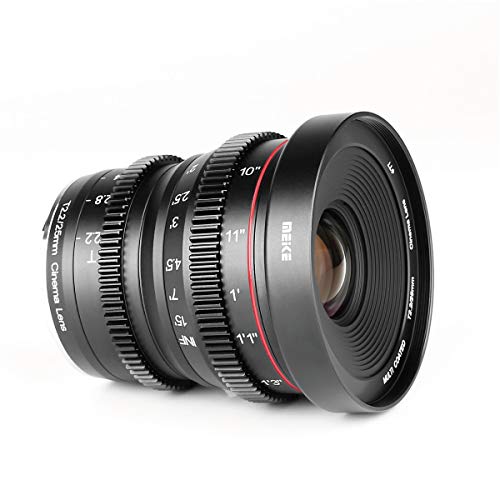
The Meike 25mm T2.2 is a manual-focus prime optimized for Micro Four Thirds cameras and cinema-style shooting. It uses a 25mm fixed focal length with a T2.2 exposure, which is helpful when you want consistent lighting control for video projects. Its lens construction features 8 groups and 10 elements, designed to deliver clean, controlled highlights and good corner performance. Being a cine lens with manual focus, it appeals to videographers and filmmakers who prioritize precise focus control and consistent exposure across shots, especially in controlled lighting setups.
Key considerations: Manual focus requires deliberate distance judgment, but the trade-off is stable, repeatable results for video work. The 25mm focal length on Micro Four Thirds yields a classic portrait-to-street perspective, and the T-number gives a familiar cinematic feel that many content creators value. This lens is best suited for users who prioritize creative control and budget-friendly cinema options over autofocus convenience.
- Focal Length: 25mm
- Maximum/T-stop: T2.2
- Mount: Micro Four Thirds
- Focus: Manual
- Element/Group: 10 elements in 8 groups
Olympus M.Zuiko 25mm F1.8

The Olympus M.Zuiko Digital 25mm F1.8 balances compact size with solid optical performance for Micro Four Thirds users. With a 50mm equivalent field of view, it is a popular choice for everyday shooting, street photography, and portraits. The lens design features a seven-blade circular diaphragm that helps deliver smooth bokeh, while the focal length supports flexible framing in tight spaces. The macro focus range reaches around 0.24 meters, adding a touch of close-up capability without sacrificing overall image quality. The lens is well-regarded for its sharp, clean rendering and reliable autofocus on compatible bodies.
Notable traits: A compact, lightweight option with bright performance for stills and video. The 25mm focal length is a staple for Micro Four Thirds shooters who want a natural perspective comparable to a 50mm lens on full-frame cameras. The combination of portability, image quality, and pleasing bokeh makes this lens a frequent recommendation for travel and everyday carry.
- Focal Length: 25mm (50mm eq)
- Aperture: F1.8
- Macro Focus Range: ~0.24 m
- Diaphragm: Seven-blade
- Mount: Micro Four Thirds
Buying Guide
Choosing the right 25mm lens for Micro Four Thirds depends on how you prioritize autofocus, manual control, size, and cinematic potential. Here are key purchase considerations to help you compare options from the list above and beyond.
- Purpose and subject: For portraits with a natural perspective, lenses with wide apertures (F1.7–F1.8) deliver pleasing background blur. For video and cinema work, a manual-focus prime like the Meike T2.2 can provide repeatable, predictable results in controlled lighting.
- Autofocus vs. manual focus: If you rely on quick, hands-free shooting, autofocus primes (like the Panasonic 25mm F1.7s) offer reliable performance. If you shoot video or want precise focus pulls, a cine lens or a manual 25mm model might be preferable.
- Light and size: The compact 25mm options are ideal for street and travel photography. Lighter lenses reduce fatigue during long shoots, while still delivering strong image quality.
- Optical qualities: Look for a design that minimizes aberrations and maintains sharpness from the center to the edges at wide apertures. Lenses with aspherical or high-refractive elements often deliver better edge-to-edge clarity.
- Bokeh and rendering: Aperture shape and diaphragm design influence bokeh. Seven-blade diaphragms tend to yield smooth, round highlights, particularly noticeable in out-of-focus areas.
- Specialized features: Cine-style lenses emphasize consistent exposure and focus control, which can be beneficial for video work, interviews, and documentary shooting.
- Compatibility and ecosystem: All listed 25mm options are compatible with Micro Four Thirds bodies, but some are optimized for stills, while others are tailored toward video. Consider your camera body’s AF performance and any stabilization features when choosing.
- Value and bundle contents: Some lenses arrive as bundles with filters, cases, or hoods. If you travel frequently, additional accessories can improve convenience and protection.
- FOV and framing: Remember that 25mm on Micro Four Thirds yields about a 50mm equivalent field of view. If you often need wider shots, consider a 20mm prime or a 25mm in an APS-C format with MFT-mount compatibility.
In summary, for everyday shooting and portraits on Micro Four Thirds, a fast 25mm prime offers flexibility and image quality in a compact form. The Panasonic options provide reliable autofocus and crisp rendering, while the Olympus M.Zuiko, 7artisans, and Meike offerings add variety for manual focus, cinematic looks, and budget-friendly experimentation. Your choice should align with how you plan to shoot—stills-focused with quick AF, film-oriented with manual control, or a mix of both—and how much you value portability versus specialized features.