Wide-angle lenses around 20mm offer expansive perspective and dramatic depth, ideal for landscapes, architecture, and immersive environmental photography. This guide spotlights five strong options across popular mounts—Sony, Nikon, and Canon—focusing on image quality, portability, and value. Use the summary table to compare core specs at a glance, then explore detailed notes for each product to determine which best fits your shooting style.
| Brand | Model | Mount | Focal Length | Max Aperture |
|---|---|---|---|---|
| Sony | SEL20F18G | FE | 20mm | F/1.8 |
| Viltrox | 20mm F2.8 FE | Sony E | 20mm | F/2.8 |
| Tamron | 20mm F/2.8 Di III OSD M1:2 | Sony E | 20mm | F/2.8 |
| Nikon | AF-S FX NIKKOR 20mm F/1.8G ED | Nikon F | 20mm | F/1.8 |
| Canon | RF 10-20mm F4 L IS STM | Canon RF | 10-20mm | F/4 |
Sony FE 20mm F1.8 G Ultra-Wide Prime
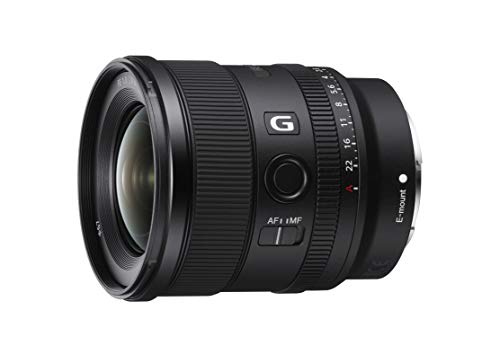
The Sony FE 20mm F1.8 G is a compact ultra-wide prime designed for Sony E-mount cameras. It delivers sharp, high-contrast results across the frame, even at wide apertures, making it a strong choice for landscapes and environmental portraits. Its F/1.8 maximum aperture provides bright exposure and shallow depth of field when needed, while maintaining solid performance at the edges. The lens is lightweight and portable, suitable for both full-frame and APS-C bodies, and it integrates cleanly into Sony-wide-shot setups.
- F/1.8 fast aperture for bright, shallow-DOF images
- Compact, lightweight design for travel and street shooting
- Sharp performance across the image circle on full-frame and APS-C sensors
- Reliable G-series optics with solid build quality
Viltrox 20mm F2.8 FE for Sony E-Mount

The Viltrox 20mm F2.8 FE for Sony E-mount emphasizes portability without sacrificing performance. It features fast autofocus suitable for dynamic scenes and is capable of transmitting EXIF data with USB firmware upgrades. The near-silent operation helps when shooting candidly or in quiet environments. Weighing about 157 grams, this lens is a light, compact option for street photography, landscapes, and travel, delivering a full-frame 20mm field of view with a practical balance of speed and size.
- Fast autofocus with EXIF transmission and USB upgrades
- Near-silent operation for discreet shooting
- Lightweight at approximately 157 g
- Full-frame 20mm focal length for broad horizons
Tamron 20mm F/2.8 Di III OSD M1:2 for Sony

The Tamron 20mm F/2.8 Di III OSD M1:2 for Sony E-mount is noted for its compact, lightweight design and strong optical performance. It offers excellent image quality with high MTF performance, and its close-focusing capability reaches 1:2, enabling macro-like detail at short distances. This makes it a versatile choice for landscapes, architecture, and close-quarters photography where space is limited but wide perspective is essential.
- Incredibly compact and lightweight
- High image quality with strong MTF performance
- Close focus to 1:2 magnification for near-macro shots
Nikon AF-S FX NIKKOR 20mm F/1.8G ED

The Nikon AF-S FX NIKKOR 20mm F/1.8G ED is an FX-format ultra-wide prime with a bright F/1.8 aperture, delivering strong low-light performance and shallow depth of field for subject isolation. Its optical design includes aspherical and extra-low dispersion elements with Nano Crystal Coat to minimize flare and aberrations, while the Silent Wave Motor enables fast, near-silent autofocus down to approximately 78 inches. This lens is well-suited for architectural photography and astrophotography where edge-to-edge sharpness is valued.
- FX-format ultra-wide with F/1.8 brightness
- Aspherical and ED elements with Nano Crystal Coat
- Silent Wave Motor for quiet, accurate AF
- Minimum focus distance around 78 inches
Canon RF 10-20mm F4 L IS STM

The Canon RF 10-20mm F4 L IS STM is a compact ultra-wide zoom designed for Canon RF-mount full-frame mirrorless cameras. It offers broad 10-20mm coverage, making it suitable for expansive landscapes and architecture while maintaining lightweight handling. The optical design includes UD elements and coatings to reduce ghosting and maintain sharpness across the frame. A built-in image stabilizer aids handheld shooting, and the lens remains well-balanced for travel and video work in the Canon ecosystem.
- Compact, lightweight ultra-wide zoom for Canon RF
- 10-20mm range with IS support
- Coatings and UD elements minimize ghosting and flare
Buying Guide
Prime vs Zoom
Prime 20mm lenses (like the Sony 20mm F1.8 G or Nikon 20mm F/1.8G) typically offer brighter apertures and sharp, consistent performance across the frame, often with smaller size and lighter weight. Zooms such as the Canon RF 10-20mm F4 L IS STM provide flexibility for framing choices without changing lenses, which can be advantageous for travel and video work. Your decision hinges on whether you prioritize maximum light gathering and compactness (prime) or versatility and framing options (zoom).
Mount Compatibility and Camera System
Align the lens with your camera system: Sony E-mount, Nikon F, or Canon RF. Consider whether you shoot full-frame or APS-C, since some lenses are designed specifically for one format. Autofocus speed and accuracy can vary by mount and body, so test performance in real-world settings—especially for action, sports, or street photography where timing matters.
Aperture, Light, and Depth of Field
Faster apertures (such as F/1.8) yield brighter images and shallower depth of field, beneficial in low light or when isolating subjects. F/2.8 is still strong for night scenes and landscapes, while F/4 may suffice for architectural shots with deep focus. Balance aperture with cost, weight, and intended use to pick the right tool for your typical shooting scenarios.
Optical Quality and Distortion Control
Look for lenses with aspherical and low-dispersion elements and coatings that reduce flare and ghosting. Wide-angle designs can exhibit barrel distortion, especially at the edges; modern coatings and precise element alignment help keep edges sharp. For architecture and interiors, edge-to-edge sharpness and minimal distortion are often decisive factors.
Size, Weight, and Handling
Portability matters for street and travel shooters. A lighter, compact lens reduces fatigue during long shoots, while a heavier lens may feel more stable on a tripod but slower to handle. Build quality and weather sealing, when available, add resilience for outdoor work.
Budget and Availability
Prices vary across brands and mounts. Prime lenses with fast apertures often cost more than standard zooms, but they can deliver superior image quality and low-light performance. Consider warranty, firmware support, and resale value when evaluating options.