Best 20-Foot Tripod Stands for Overhead Shots and Tall Perspectives
Photographers and videographers increasingly rely on tall, air-cushioned tripod stands to capture dramatic overhead angles, sports actions, and large studio setups. This guide highlights five reliable options that extend up to 20 feet, with built-in safety features to protect gear and fingers. Each product blends height, stability, and ease of use for American shooters working in studios, arenas, or on location.
| Product | Max Height | Load Capacity | Highlights |
|---|---|---|---|
| RAUBAY 16′ Extreme Tall Tripod | 16 ft / 192 in | 8.8 lbs load | Air-cushioned telescoping; full aluminum body; tall sports-ready |
| Kate X201471 15.7 ft Light Stand | 15.7 ft | 9.46 lb | Air cushioning; reinforced 25mm steel base; multi-section tubes |
| GEORDGY 20 ft Heavy-Duty Stand | 20 ft | 17 lbs (approx) | Air-cushioned; 4-section center post; wide base |
| Glide Gear TST 20 Sky High | 20 ft | 8 lb | 5 air-cushioned sections; lightweight aluminum |
| NEEWER/Cisian 13 ft (not chosen) | 13 ft | 6.5 lb | Air cushion; versatile mounting |
Note: This introduction highlights five tall stands that support overhead and aerial-style shoots. For a broader range of tall options, consider the features below and compare based on maximum height, load support, and the presence of air cushioning for safe operation.
RAUBAY 16′ Extreme Tall Tripod Stand

The RAUBAY TT480 is designed for high-visibility shoots, extending up to 16 feet. Its air-cushioned telescoping mechanism slows descent to protect cameras during height adjustments. Built with a robust aluminum alloy body, it combines durability with a manageable weight, and supports up to 8.8 lbs. The tall profile is beneficial for gymnasiums, stadiums, and studios that require elevated camera angles to capture wide scenes or long lines of action.
Kate Heavy Duty Light Stand 15.7 ft
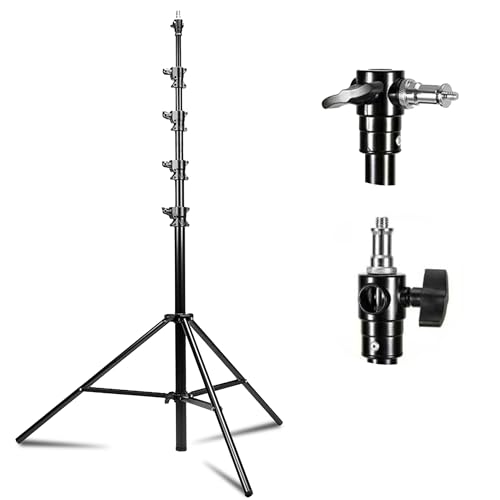
The Kate X201471 offers substantial height with a 15.7-foot reach, ideal for overhead lighting, studio portraits, or long-throw camera rigs. It includes two weighted sandbags and a stable base with anti-slip feet, helping reduce wobble during windy outdoor shoots or heavy lighting setups. Air cushioning protects equipment from sudden drops and minimizes shock as you extend or lower gear during complex multi-device configurations.
GEORDGY 20 ft Heavy-Duty Stand

GEORDGY’s 20-foot stand is built for extensive overhead shooting. The design utilizes a tall, four-section center post and a broad base to maximize stability, even when extended fully. Air cushioning helps lower the equipment gently, reducing risk to delicate cameras and lights. The robust frame supports heavy commercial lighting and camera rigs, making it suitable for large-scale productions, sports arenas, and outdoor event coverage.
Glide Gear TST 20 Sky High

The Glide Gear TST 20 is an adjustable, 20-foot mast tripod designed for overhead filming and photography. Its five air-cushioned sections deliver smooth, controlled lowering of cameras, reducing the risk of gear impact. Constructed from lightweight aluminum, it provides a balance between portability and strength, supporting up to 8 lbs of equipment. It’s well-suited for overhead cinematic shots, auditorium events, and long-reach drone-like setups when fixed points are necessary.
Cisian 13 ft Heavy Duty Light Stand

The Cisian 13-foot heavy-duty light stand provides a more modest height option with strong stability for studio LED lights, cameras, or reflectors. It features an adjustable height range and 1/4″ screw compatibility. The air cushioning capability protects sensitive gear during height transitions, highlighting a balance between reach and maneuverability for smaller overhead setups, sports filming, and studio photography contexts.
Buying Guide
- Height vs. stability: Taller stands allow dramatic overhead angles but require a solid base and counterweights to prevent tipping. Look for wide bases, sturdy center columns, and anti-slip feet for indoor or outdoor use.
- Air cushioning: Air-cushioned legs and posts protect gear during extension and retraction. This feature minimizes finger pinches and sudden drops when adjusting height.
- Load capacity: Verify that the stand’s maximum load comfortably exceeds the weight of your typical gear (cameras, lights, or rigs). Overloading can compromise stability and safety.
- Material and weight: Aluminum stands provide a favorable strength-to-weight ratio for field use. Lighter models are easier to transport but may feel less rigid when fully extended.
- Ease of setup: Five- or four-section extensions offer fine height control but may require more time to deploy. Quick-release clamps and locking screws speed up the process for fast shoots.
- Portability: Consider bundled carry bags or included sandbags for convenient transport and added stability in outdoor environments.
- Compatibility: Check screw standards (1/4″ and 3/8″) and mounting interfaces to ensure compatibility with your camera bodies, lights, and accessories.
- Use case variety: For overhead video, theater, or sports events, prioritize tall stands with stable bases; for studio lighting, weight and ease of adjustment may be more critical.