Selecting an affordable, versatile lens is essential for any APS-C camera shooter. The 18-55mm family offers broad wide-to-portrait coverage, lightweight handling, and compatibility with Canon EF-S, Nikon DX, and Fujifilm X systems. This guide highlights five standout options, focusing on image quality, stabilization, autofocus speed, and practical use across travel, portraits, and landscape work. Each lens below provides solid optical performance without the bulk or price of pro zooms, making them ideal as kit upgrades or budget-friendly upgrades for new camera bodies.
| Product | Brand | Mount | Why It Stands Out |
|---|---|---|---|
| Canon EF-S 18-55mm II | Canon | Canon EF-S | UD-glass, lightweight, good optical correction |
| Canon EF-S 18-55mm STM | Canon | Canon EF-S | Quiet AF and good for video, improved zoom system |
| Nikon 18-55mm DX VR | Nikon | Nikon DX | VR for stabilization, SWM AF |
| Fujifilm XF 18-55mm | Fujifilm | Fujifilm X mount | OIS, low dispersion elements, sharp across range |
| Canon EF-S 18-55mm III | Canon | Canon EF-S | Aspheric element, compact, fast AF |
Canon EF-S 18-55mm II SLR Lens White Box

- Focal Length & Maximum Aperture: 18-55mm f/3.5-5.6 II
- Lens Construction: 16 elements in 12 groups, including UD-glass and aspherical elements
- Diagonal Angle of View: 74°20′ – 7°50′ with APS-C sensors
- Mount Compatibility: Canon EF-S for Canon APS-C bodies
This kit lens delivers a versatile range suitable for landscapes, street photography, and everyday shooting on Canon APS-C bodies.
Canon EF-S 18-55mm f/3.5-5.6 STM Lens
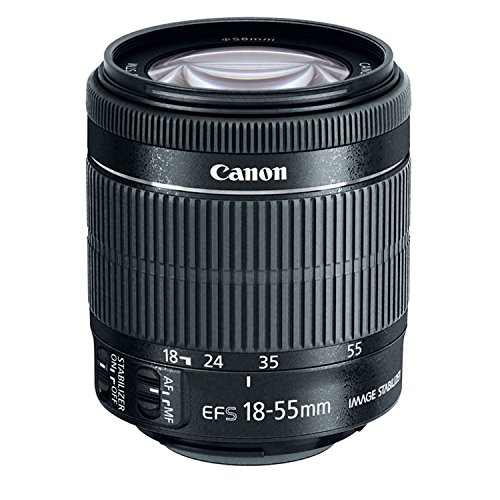
- Minimum Focusing Distance: 0.82 ft/0.25 m full zoom range
- High Magnification for closer subjects
- Optical Image Stabilizer supporting up to four stops of shake correction
- Canon EOS Movie Servo AF for smooth, quiet continuous AF in video
This STM version emphasizes video-friendly autofocus and compact travel usability, making it a strong all-around pick for Canon shooters who film and shoot stills.
Nikon 18-55mm DX VR Nikkor Zoom Lens

- Focal Length: 18-55mm with f/3.5-5.6 maximum aperture
- Angle Equivalent: 27-82.5mm in 35mm terms
- Silent Wave Motor (SWM) AF and Vibration Reduction (VR)
- Designed for Nikon DX-format DSLR cameras
Ideal for travel and everyday photography with Nikon DX bodies, combining compact size with built-in stabilization for handheld shooting.
Fujifilm XF 18-55mm f/2.8-4 R LM OIS Lens

- Focal Length: 18-55mm with 27-84mm equivalent on APS-C
- One extra-low dispersion element to reduce color fringing
- Super EBC coating reduces flare and ghosting
- OIS (optical image stabilization) for steadier handheld shots
Renowned for travel versatility and sharp performance across the range, with stabilization helping in low-light and dynamic outdoor settings.
Canon EF-S 18-55mm III White Box

- Aspheric Lens Element
- High Speed Auto Focus
- Focal Length & Max Aperture: 18-55mm f/3.5-5.6
Standard-issue Canon EF-S zoom with modern AF performance and improved optics for everyday photography on Canon APS-C bodies.
Buying Guide
Key Factors To Consider
Choosing the right 18-55mm lens depends on your camera system, shooting style, and priorities. Consider mount compatibility (Canon EF-S, Nikon DX, Fujifilm X), whether you value stabilization for handheld shots, and whether you need video-friendly autofocus. Aperture range matters: STM and similar motors excel for video, while older II or III variants may be lighter and cheaper. Close focusing distance, optical corrections like UD glass or extra-low dispersion elements, and the presence of aspheric elements influence sharpness and distortion control across the zoom range.
Mount Compatibility And System Ecosystems
18-55mm lenses are usually designed as kit zooms for specific camera families. Canon EF-S versions suit Canon APS-C bodies, Nikon DX versions fit Nikon DX DSLRs, and Fujifilm X-mount versions are for Fujifilm’s APS-C mirrorless cameras. When selecting, ensure the lens aligns with your body’s mount, flange distance, and autofocus system. In many kits, newer STM or LM/OIS-enabled versions improve movie AF and stabilization, making them better suited for hybrid photo-video use.
Image Quality And Optics
Optical elements like UD glass, aspheric elements, and extra-low dispersion help minimize distortion and chromatic aberration. Coatings such as Super EBC reduce flare and ghosting in bright scenes. Stabilization (VR or OIS) helps in low-light or handheld shooting. Consider how the center sharpness holds up toward the edges at 18mm and 55mm, and whether the lens maintains contrast across the frame when shooting against backlit scenes or high-contrast landscapes.
Practical Comparisons Across The 18-55 Line
For video work, the Canon EF-S STM variant often delivers quieter, smoother autofocus, while the older II version may be lighter and more affordable. The Nikon DX VR model adds stabilization for handheld photography and videography, which is beneficial for travelers. Fujifilm’s XF 18-55mm with OIS and high-quality coatings tends to produce high-contrast images with good color fidelity, making it a strong all-around choice for Fujifilm users. When assessing renewed or white-box options, verify cosmetic condition and any warranty terms.
Usage Scenarios And Recommendations
Travelers benefit from the compact form and wide-to-normal zoom that covers landscapes and street scenes. Beginners may prefer STM variants for video-friendly AF, while hobbyists who shoot primarily stills can opt for the lighter II or III versions. If you own multiple bodies, matching the mount type is essential, as cross-mount compatibility is limited. Always test autofocus speed in your typical shooting conditions, and check how the lens handles high-contrast scenes to assess potential chromatic issues across the zoom range.