Choosing a 16mm C-mount lens or adapter can unlock distinctive wide-angle perspectives for mirrors, CCTV rigs, and Raspberry Pi projects. This guide highlights five reliable options that balance image quality, manual control, and compatibility with common camera bodies and mounts. Each entry includes key features and practical use cases to help you compare performance and value for your next build.
| Product | Brand | Type | Notes |
|---|---|---|---|
| Arducam C-Mount Lens for 12MP IMX477 Raspberry Pi HQ Camera | Arducam | Lens | 16mm focal length; manual focus; adjustable aperture |
| Fotasy 16mm Prime Black C Mount & Nikon F Lens Adapter | Fotasy | Adapter | Increases versatility for CCTV and cinema setups |
| Fotasy C Mount To E-Mount Lens Adapter | Fotasy | Adapter | Enables 16mm C-mount lenses on Sony E-mount bodies |
| Fotasy 16mm C Mount Lens To Fuji X Adapter | Fotasy | Adapter | Fits Fuji X mount; infinity focus guaranteed |
| Fotasy 16mm C Mount Lens To Canon EF-M Adapter | Fotasy | Adapter | Fits Canon EF-M; infinity focus guaranteed |
Arducam 16mm C-Mount Lens For HQ Camera
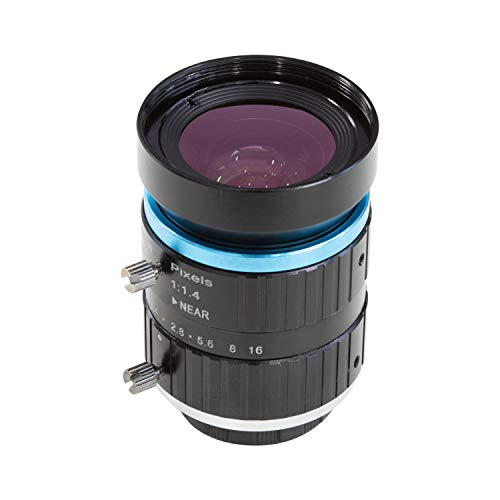
The Arducam C-Mount Lens is designed for the 12MP IMX477 Raspberry Pi HQ Camera. It offers a 16mm focal length with manual focus and adjustable aperture. It is noted for reliable performance without noticeable shading, making it a practical plug-and-play option for hobbyists and makers.
- Focal length: 16mm
- Manual focus and adjustable aperture
- Designed for Raspberry Pi HQ Camera with IMX477
Field of view on the IMX477 setup is about 44.6° horizontal by 33.6° vertical, enabling close-to-mid-range compositions with minimal distortion. The lens is positioned as an economical choice that preserves image quality while simplifying setup for DIY projects.
Fotasy 16mm C Mount To Nikon F Adapter

This adapter enables a 16mm C-mount lens to fit Nikon F-mount cameras. It features a copper lens mount for durability and provides infinity focus. There are no electrical contacts, so exposure and focus are controlled manually by the user.
- Mount: C-mount to Nikon F
- Infinity focus guaranteed
- No electrical contacts
Fotasy C Mount To E-Mount Adapter

Allows 16mm Cine Lens to fit on Sony E-mount mirrorless bodies. Infinity focus is guaranteed, and the adapter has no electrical contacts, so automatic diaphragm, autofocus, or other electronic functions will not operate when used.
- Mount: C-mount to Sony E
- Infinity focus guaranteed
- No electrical contacts
Fotasy 16mm C Mount Lens To Fuji X Adapter

Solid C-Mount to Fuji X Mount adapter; allows 16mm Cine Lens to fit on Fujifilm X series cameras. Infinity focus is guaranteed; The adapter has no electrical contacts, so exposure and focus require manual adjustment.
- Mount: C-mount to Fuji X
- Infinity focus guaranteed
- No electrical contacts
Fotasy 16mm C Mount Lens To Canon EF-M Adapter

Adapts a 16mm Cine Lens to Canon EF-M bodies. Infinity focus is guaranteed. The adapter has no electrical contacts, so manual exposure and focus are required.
- Mount: C-mount to Canon EF-M
- Infinity focus guaranteed
- No electrical contacts
Buying Guide
Choosing between a dedicated 16mm C-mount lens and adapters depends on your camera system, project goals, and how you plan to use the lens. A purpose-built lens like the Arducam option often provides straightforward installation and direct control over focus and aperture, with predictable performance on the target sensor. Adapters, by contrast, maximize compatibility across brands (Sony E, Fuji X, Canon EF-M, Nikon F) but typically offer only manual operation and no electricity pass-through. Evaluate whether you need a fixed cross‑system solution or the flexibility to reuse existing lenses.
Key purchase considerations
- Camera compatibility: Confirm your body’s mount and whether the adapter or lens supports infinity focus with your sensor.
- Focal length and field of view: 16mm yields wide views; verify how that translates to your sensor size and aspect ratio.
- Manual vs automatic control: Adapters generally require manual focus and exposure control; dedicated lenses may provide some aperture control.
- Build quality: Look for copper or robust metal mounting and smooth focusing mechanisms.
- Image quality and shading: Check for consistent edge performance and absence of shading or vignetting, especially on smaller sensors.
- Future-proofing: If you anticipate changing cameras, adapters may save costs, but ensure they physically fit future bodies.
- Price and availability: Some options offer better value in terms of durability and ease of use; consider after-sales support.
Practical use cases and comparisons
- Raspberry Pi HQ Camera projects benefit from a dedicated 16mm lens with manual aperture control and predictable performance.
- Adapters are ideal for experimentation across brands, allowing you to reuse existing 16mm lenses on modern mirrorless bodies.
- For cinematic experiments, prioritize lenses with reliable focus ramps and sturdy construction over minimal price alone.