Best 16mm C-Mount Lens Options for Raspberry Pi HQ Camera and Industrial Use
For buyers seeking a 16mm c-mount lens, this guide highlights five well-suited options. Each lens caters to different needs—from budget-friendly, general-purpose use to higher-speed, low-light performance and industrial machine-vision applications. This article helps you pick the right 16mm c-mount lens based on field of view, aperture, and compatibility with common camera modules. The top picks are ideal for photography enthusiasts, hobbyists, and professionals working with 12MP IMX477 or similar sensors. A quick summary table follows to compare core specs at a glance.
| Product | Focal Length | Best For | Notes |
|---|---|---|---|
| Arducam C-Mount Lens for 12MP IMX477 HQ Camera | 16mm | RPi HQ Camera users | Manual focus and adjustable aperture; 44.6°×33.6° FOV |
| HTENG VISHI 16mm 2/3″ Fixed Focal Lens | 16mm | Industrial machine vision | Low distortion; 2/3″ image size |
| HTENG VISHI 16mm 1/1.8″ Fixed Focus Lens | 16mm | Machine vision with tighter specs | High-quality lens; distortion <1% |
| Arducam CS-Mount Lens Kit (6-25mm, Pack of 5) | 6–25mm | Flexible kit for testing | Includes 5 focal lengths; accessible CS-mount |
| Xenocam CCTV 16mm Lens | 16mm | Fixed focal length CCTV and entry-level cameras | Fixed 16mm; 21° FOV |
Arducam C-Mount Lens for 12MP IMX477 HQ Camera
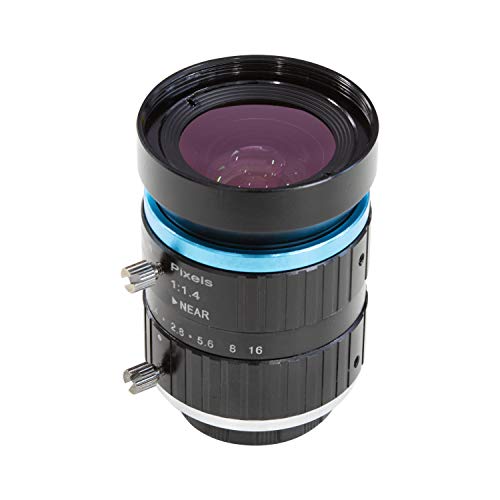
Best for Raspberry Pi HQ Camera users seeking a ready-to-go 16mm option. This lens provides manual focus and adjustable aperture to fine-tune depth of field on the 12MP IMX477 sensor. It aims to reduce shading and dark corners, delivering a straightforward plug-and-play experience with compatible modules. The 44.6°(H) × 33.6°(V) field of view makes it suitable for general close-to-mid-range scenes and product photography. Choose this if you want a cost-effective, tested lens that “just works” with minimal setup.
Who it’s for: hobbyists and makers using the Raspberry Pi HQ Camera who want consistent results without extensive calibration. Limitation: manual controls may slow rapid shooting compared to auto-focus zoom lenses.
HTENG VISHI 16mm 2/3″ Fixed Focal Lens

Best for industrial machine vision with a 2/3″ image size and low distortion. This 16mm fixed focal lens is designed for stable imaging in automated environments, offering predictable performance under controlled lighting. The lens is a practical choice for setups requiring reliable, repeatable frames without complex adjustments. Choose this if you operate in assembly lines or quality-control imaging where consistency matters. Caution: compatibility with your sensor size must be verified prior to purchase.
HTENG VISHI 16mm 1/1.8″ Fixed Focus Lens

Best for higher-resolution applications needing a larger image format. This 16mm lens uses a 1/1.8″ size and fixed focus to minimize focus drift in industrial environments. It includes features like low distortion (<1% as noted) and good overall sharpness for precise imaging. Best for dedicated imaging stations or fixed installations where frequent recalibration is impractical. Limitation: fixed focus means closer-than-expected subject distances may require repositioning.
Arducam CS-Mount Lens Kit (6–25mm)
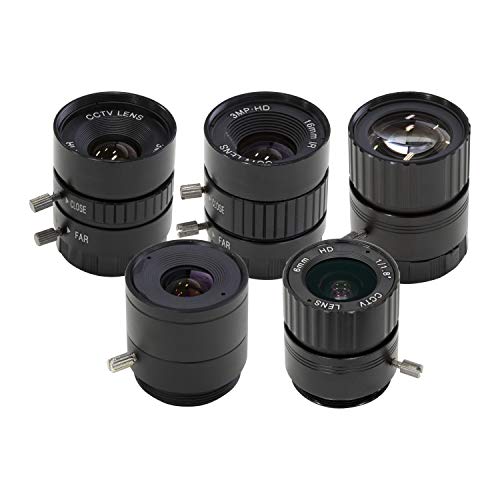
Best for versatile testing and a broad field of view. The CS-mount kit includes five focal lengths (6mm, 8mm, 12mm, 16mm, 25mm) so you can quickly compare FoV and perspective with your Raspberry Pi HQ Camera. It’s a curated selection chosen for predictable performance, avoiding guesswork. Best for projects requiring quick experimentation with different views. Caution: for true macro or macro-like work, dedicated macro lenses are preferred.
Xenocam CCTV 16mm Fixed Lens

Best for straightforward CCTV or entry-level camera setups requiring a fixed 16mm focal length. This lens provides a 21° angle of view and a fixed F2.0 aperture, suitable for standard surveillance or hobby projects. It is a simple, reliable choice when a fixed, non-adjustable lens aligns with project needs. Limitation: fixed aperture and focal length reduce flexibility in dynamic lighting or distance conditions.
Buying Guide
- : Verify sensor size compatibility (1/3″, 1/2.3″, 2/3″, or 1/1.8″) and mount type (C-mount vs CS-mount) for your camera module.
- : A 16mm lens generally offers a similar angle of view, but the exact FoV depends on the sensor size and lens design. Choose based on desired scene coverage.
- : Lenses with wider apertures (e.g., F1.6) perform better in low light and deliver shallower depth of field. Fixed-aperture lenses are predictable but less flexible in changing lighting.
- : Manual focus and aperture provide control for precise scenes, while automatic features speed up general shooting. Consider how frequently you’ll adjust focus or exposure.
- : A flexible CS-mount kit is useful for testing multiple focal lengths, while a dedicated 16mm fixed lens is simpler and often more robust for a single use case.
- : Industrial-focused lenses emphasize low distortion and stable performance; consumer or hobby lenses prioritize cost and ease of use.
- : Ensure correct back focus alignment, verify compatibility with the camera’s sensor size, and check if vibration or lighting conditions affect performance.
Frequently Asked Questions
- What’s the difference between CS-mount and C-mount? CS-mount lenses are designed for compact cameras and require shorter back focus. C-mount lenses are longer and compatible with a wider range of cameras, including many Raspberry Pi and industrial cameras.
- Is a fixed 16mm lens better for video than a zoom? Fixed focal length lenses offer consistent performance and often sharper results at their designed distance, while zooms provide flexible framing across scenes.
- Can I use these lenses with Raspberry Pi HQ Camera? Yes, several 16mm c-mount options are compatible, especially those designed for IMX477-based HQ Cameras or with CS-mount adapters.
- Do I need to worry about distortion? Some industrial lenses advertise low distortion (<1%). Distortion matters for architectural or measurement-focused work; for general photography, it’s less critical.
- What should I consider for low-light use? Lenses with larger maximum apertures (e.g., F1.6 or faster) perform better in dim lighting, and sensor compatibility remains essential.
- How important is back focus adjustment? Back focus helps ensure the image is sharp at the intended distance. Some lenses include adjustment rings; others require mounting alignment.