Best 120 Film Negative Sleeves for Safe Archiving and Easy Organization
Protecting and organizing 120 film negatives is essential for preserving memories and ensuring easy access for future use. This guide highlights five reliable 120 film negative sleeves and storage pages, chosen for acid-free materials, roomy per-page capacity, and binder compatibility. Each product is evaluated on size, durability, and ease of use to help collectors and photographers keep their negatives pristine over time.
Summary of selected products:
| Product | Capacity Per Page | Material | Binder Compatibility | |
|---|---|---|---|---|
| Print File 120-4B Negative Preservers | 4–12 frames, depending on format | Acid-free paper/foil options | Standard 3-ring binders | 8 9/16″ x 11 5/16″ |
| KDIMSY 30Pcs 120 Film Sleeves | 16 pieces 6×4.5 cm, 12x 6×6 cm, or 8x 6×9 cm per page | Acid-free paper, archival storage sheets | Compatible with 3-ring binders | Approx. 11.2″ x 10.1″ |
| eTone 50x 120 Negative Page Preservers | 4 strips per page, 12 frames total | Archival polyethylene, PVC-free | Oversized and OB-1 style binders | Approx. 11.2″ x 10.1″ |
| MUQING 100 Sheets 120 Film Pages | Holds 120 film total per package | Archival grade polyethylene, PVC-free | Standard 3-ring binders | Not stated on packaging |
| YCCLDIPL 50 Archival Storage Sheets | Holds four 120 strips, 12 frames total | PVC-free Mylar sheets | Suitable for long-term storage in binders | Approx. 28.6 cm x 25.6 cm |
Print File 120-4B Negative Preservers

The Print File 120-4B Negative Preservers are designed to accommodate a mix of 120 film sizes, with capacity for twelve frames of 6×4.5cm or 6x6cm, or eight frames of 6x7cm per preserver. This setup supports compact, organized storage for a common subset of 120 film formats. The product is positioned for easy handling in traditional photo portfolios or archival boxes. The 8 9/16″ x 11 5/16″ dimensions make it convenient to insert into standard archival sleeves and larger binder pages. For users who routinely digitize older negatives, these sleeves help maintain original order during transfer. Key considerations include ensuring compatible frame sizes and the need for additional archiving materials for larger repeats.
KDIMSY 30Pcs 120 Film Sleeves

These 30 sleeves provide a broad capacity per page, accommodating 16 pieces of 6×4.5 cm, 12 pieces of 6×6 cm, or 8 pieces of 6×9 cm. The set includes archival storage paper to help organize a large collection of 120 film negatives. The materials are described as acid-free, aiming to minimize chemical interactions that can impact film over time. The generous dimensions—about 11.2 by 10.1 inches per page—support a straightforward, binder-based organization strategy. Consider whether your binder system supports the largest page format and if you prefer a higher sleeve count per package for quicker system expansion.
eTone Archival Storage Sheets 120 Negative

The eTone 50x 120 Negative Page Preservers emphasize archival polyethylene and PVC-free construction, aligning with long-term storage needs. They hold four 120 strips per page, totaling 12 frames, which supports mid-sized batches per page. The oversized format is compatible with larger binders or OB-1 storage solutions. For collectors prioritizing chemical stability and long-term protection, these sheets provide a clear option to minimize interactions between film and storage materials. The PVC-free composition helps address concerns about plasticizers migrating into negatives over extended periods.
MUQING 100 Sheets 120 Film Page Preservers
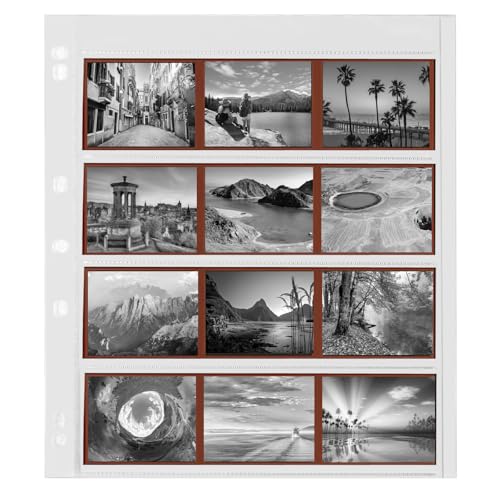
MUQING offers a bulk option with 100 pages designed to hold 120 film. The product emphasizes archival-grade polyethylene and PVC-free composition for safe, long-term storage. This setup is well-suited for serious collectors or small studios needing to scale their archival system without frequently reordering supplies. The packaging notes that negatives and binders are not included, which means users should plan a compatible binder system and ensure they have sufficient archival paper inserts to complete the storage pages. Consider your workflow—whether you need ready-to-fill sheets or a scalable expansion path.
YCCLDIPL 50 Archival Storage Sheets
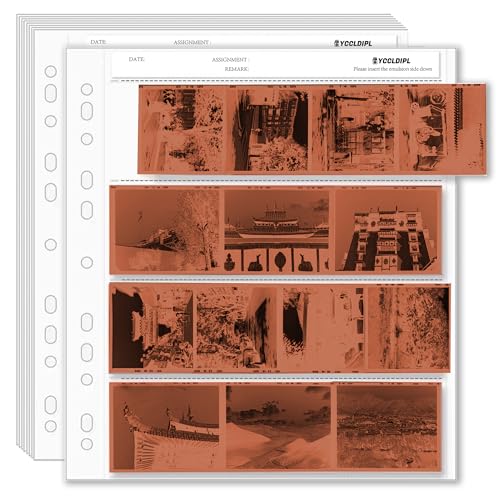
YCCLDIPL’s 50-sheet set emphasizes easy use and four-strip capacity per page, totaling 12 frames. The sheets are described as PVC-free Mylar, designed for long-term protection of photos and memorabilia. The large page dimensions (approximately 28.6 cm by 25.6 cm) make these suitable for wide or custom binder systems that require more generous per-page space. Evaluators may weigh the benefits of larger page sizes against the need for standard binder compatibility, ensuring your storage solution remains cohesive with existing archival materials.
Buying Guide: Key Considerations for 120 Film Negative Sleeves
- Material safety: Look for acid-free or PVC-free materials to guard against long-term chemical damage and binder interactions.
- Per-page capacity: Choose sleeves that match your common film sizes (6×4.5 cm, 6×6 cm, 6×7 cm) and desired per-page frame count.
- Binder compatibility: Ensure pages fit your 3-ring or oversized binders and align with your archival workflow.
- Page size and organization: Consider whether larger pages enhance visibility and tracking, or if standard-sized pages maximize binder density.
- Bulk options: If you have a large collection, bulk sheets can reduce reordering frequency and help maintain consistent storage conditions.
- Protection vs. accessibility: Heavier-duty sleeves offer better protection but may be less flexible for quick access; balance your need for protection with ease of use.
- Archival workflow: Plan a labeling system, index cards, or a digital catalog to pair with your physical storage for efficient retrieval.
Across these options, the best choice depends on your specific film formats, binder setup, and how aggressively you plan to grow your archive. For mixed-format collections, a combination of larger, PVC-free sheets with smaller-capacity sleeves can provide both protection and flexibility. If you primarily manage 6×4.5 cm or 6×6 cm negatives, prioritize per-page capacity and compatibility with your binder system to keep metadata and film ordering consistent.