Best Telephoto Lenses for Astrophotography
The following selection focuses on telephoto lenses that excel at capturing distant celestial targets and night skies, whether you shoot with DSLR, mirrorless, or specialized lens setups. Each option offers strong performance for astrophotography, from wide apertures for low light to long focal lengths for distant subjects. The list prioritizes versatility, build quality, and image sharpness across a range of budgets and camera systems.
| Product | Brand | Approximate Focal Range | Key Strength |
|---|---|---|---|
| Canon EF 75-300mm Telephoto Zoom Kit | Canon | 75-300mm | Versatile zoom with solid autofocus |
| JINTU 420-800mm MF Telephoto | JINTU | 420-800mm | Long reach with compact build |
| High-Power 420-1600mm HD Zoom | Big Mike’s | 420-1600mm | Very long reach for distant targets |
| Rokinon 135mm F2.0 | Rokinon | 135mm | Bright prime for galaxies/nebulae |
| Samyang 135mm F1.8 for Sony E | Samyang | 135mm | Fast aperture and astrophotography features |
The products below are arranged to cover a range of camera systems and astro-specific needs—from long-range super-telephotos to fast primes ideal for wide-field deep-sky captures. Each entry includes a direct link to Amazon, a visual, and the essential features to help compare suitability for astrophotography tasks such as tracking, star field sharpness, and night-sky detail.
Canon EF 75-300mm Telephoto Kit

Canon EF 75-300mm Telephoto Zoom Kit offers a 4x telephoto zoom range suitable for general wildlife and distant subjects, which can be used for wide-field nightscapes when paired with a stable tripod. The kit emphasizes a compact, lightweight design with a DC micro motor for autofocus speed and reliability. For astrophotography, the zoom range supports framing distant stars, planets, or meteor trails from a dark site, though exposure and tracking performance will rely on stable mounting and longer exposure techniques. This lens is best used on Canon bodies with compatible adapters where applicable.
JINTU 420-800mm Telephoto
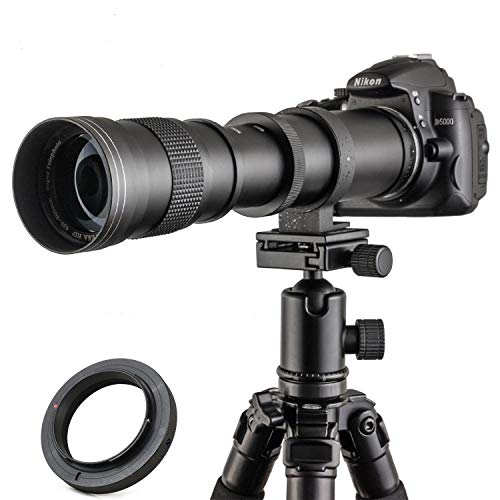
JINTU’s 420-800mm telephoto provides a substantial reach for celestial subjects and distant terrestrial scenes. The build highlights a metal body with a compact profile, and it supports Canon EF-S and full-frame bodies with the included adapters. The lens is suitable for moon close-ups, planetary views, and astrophotography where you want tighter framing without large gear changes. Its size makes it a practical option for travel or remote observing sessions, especially when paired with a sturdy tripod and a remote shutter release.
High-Power 500mm/1000mm Telephoto

This Big Mike’s 500mm/1000mm f/8 manual telephoto lens is designed for Canon DSLR cameras, offering an integrated 2x teleconverter to reach 1000mm. For astrophotography, the long focal length helps isolate planets, star clusters, and Milky Way features against dark skies. The manual focus approach requires precise planning, star-tracking or stacked exposures, and careful calibration of exposure to avoid trailing. This setup is best paired with a stable tripod, a remote release, and possibly a tracking platform in longer sessions.
Rokinon 135mm F2.0 Telephoto
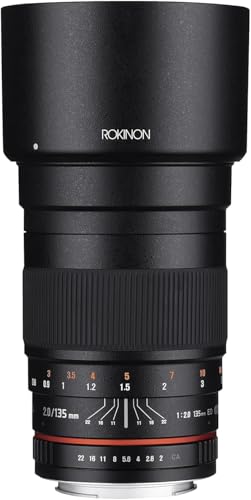
The Rokinon 135mm F2.0 is a fast telephoto prime suitable for astrophotography with both full-frame and APS-C cameras. Its bright aperture supports shorter exposure times and better starfield detail in deep-sky imaging, particularly for galaxies and nebulae. Compatible with multiple camera mounts, it appeals to shooters seeking high image quality and a lightweight, dedicated astro lens. Focus control and star-tracking remain critical considerations; pairing with a tracking mount or precise manual focusing is recommended for long exposures under dark skies.
Samyang 135mm F1.8 for Sony E

Samyang 135mm F1.8 for Sony E is a bright prime with a wide F1.8 aperture, delivering strong low-light performance for astrophotography and portrait work. The lens includes advanced features like a focus hold option and a focus range limiter, enabling efficient focusing during night shoots. Its quiet autofocus and optical clarity support astro captures with minimal star trailing when used with a stable mount. The fast aperture aids in capturing rich star fields, especially in darker skies where exposure times are critical for reducing noise.
Samyang 135mm F1.8 For Sony E
Note: The Samyang 135mm F1.8 section above is representative of the same model offered for Sony E, emphasizing the bright aperture and astro-focused features. For astrophotographers using Sony systems, this lens offers a compelling blend of light-gathering power and image quality. When used with a tripod, remote shutter, and proper calibration, it supports high-quality night-sky imagery and detailed star field renders.
Buying Guide: Key Purchase Considerations
Camera compatibility and system support are essential. Confirm mount compatibility (Canon EF, Sony E, Nikon, etc.) and whether adapters are included or required. For astrophotography, a fast aperture (f/2.0 or faster) helps collect more light, reduce exposure times, and minimize star trailing in shorter sessions. The focal length determines field of view: longer focal lengths isolate planets and bright deep-sky objects, while mid-range telephotos are better for wide-field Milky Way captures.
Build quality and stability matter more in astronomy. Look for robust construction and compatibility with sturdy tripods or tracking mounts. Manual focus lenses demand precise control and reliable focusing aids; autofocus can be less critical in astro work but helps during daytime framing or daylight tests. Consider whether you need a zoom or prime lens based on your typical targets and travel needs. Weight, balance, and portability influence how comfortably you can work under night skies.
Image quality factors to compare include sharpness across the frame, edge-to-edge clarity, chromatic aberration control, and coma performance at wide-open apertures. A longer focal length increases the risk of field rotation on shorter exposures; combining long lenses with equatorial mounts or star trackers can mitigate this. Budget considerations vary; while ultra-long focal lengths enable dramatic distant views, the optimal choice balances optical performance with mount capability and learning curve for astrophotography.