Best Micro Four Thirds Lenses for Every Budget and Style
Micro Four Thirds (MFT) cameras from Panasonic, Olympus (OM System), and other brands offer a compact, versatile system for enthusiasts and professionals alike. This guide highlights five standout lenses that cover a range of focal lengths and uses—from portrait primes to versatile zooms—while keeping size, weight, and performance in mind. Each selection ties directly to the MFT ecosystem, helping you build a balanced kit without sacrificing image quality or portability.
Summary Of Chosen Products
| Product | Brand | Focal Range | Key Feature |
|---|---|---|---|
| Panasonic LUMIX G VARIO 45-150mm | Panasonic | 45-150mm | Optical Stabilization and near-silent autofocus |
| OM SYSTEM M.Zuiko 40-150mm F4.0-5.6 R | OM SYSTEM | 40-150mm | Lightweight telezoom with macro focus range |
| Panasonic LUMIX G 25mm F1.7 ASPH | Panasonic | 25mm | Bright prime with compact design |
| Panasonic LUMIX G VARIO 45-200mm F4.0-5.6 | Panasonic | 45-200mm | Built-in Optical Image Stabilization for long reach |
| YONGNUO YN25mm F1.7M | YONGNUO | 25mm | Affordable fast prime for MFT |
Panasonic LUMIX G VARIO 45-150mm F4.0-5.6 ASPH

The Panasonic 45-150mm telephoto zoom covers mid-to-telephoto ranges ideal for portraits, events, and nature shots. It employs a multi-coated optical design with 12 elements in 9 groups, including one UHR and two aspherical elements to minimize ghosting and flare. An inner focus system delivers sharp resolution from life-size magnification to infinity, while a stepping motor provides smooth and quiet autofocus, beneficial for both video and stills. The Mega O.I.S. stabilization helps maintain sharpness in low light or at longer focal lengths by reducing hand shake.
OM SYSTEM M.Zuiko Digital 40-150mm F4.0-5.6 R

This lightweight telezoom offers a practical 40-150mm reach with a compact footprint, making it a strong travel partner. Its focal length covers standard-to-telephoto needs, while the macro focus range extends versatility for close-up work. With a 3.75x zoom, it provides flexibility for portraits, street, and travel photography. The lens is designed to stay portable without sacrificing image quality, delivering solid performance for Micro Four Thirds shooters who want better reach without adding much weight to the kit.
PANASONIC LUMIX G VARIO LENS 45-200MM

The 45-200mm zoom is built for reach, combining a versatile focal range with practical portability. It features a Macro Focus Range of 1.00 m and offers a broad telephoto span ideal for wildlife, sports, and distant subjects. Its built-in Optical Image Stabilization reduces blur from hand movement, helping preserve sharpness at longer focal lengths while keeping the kit compact compared with traditional DSLR lenses.
YONGNUO YN25mm F1.7M Auto Focus
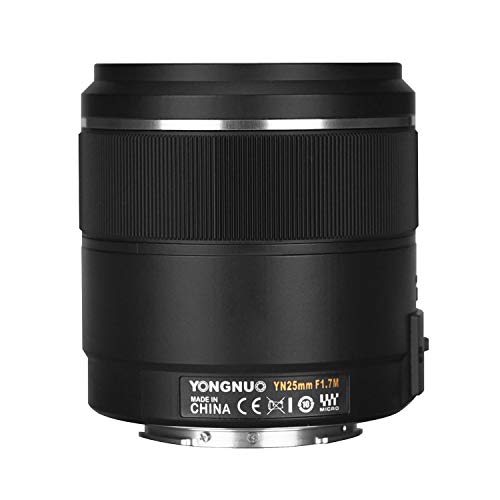
The Yongnuo 25mm f/1.7M is a fast standard prime for Micro Four Thirds, offering a natural 50mm equivalent field of view. Its bright f/1.7 aperture enables shallow depth of field and better low-light performance. The lens supports both autofocus and manual focus operation, combining accessibility with precise control. It’s compatible with Olympus and Panasonic bodies, making it a budget-friendly option for portraits, street photography, and everyday shooting.
YONGNUO YN42.5mm F1.7M II

Note: This lens is a fixed prime with a 42.5mm focal length, offering a fast f/1.7 aperture and compact form. While primarily used for portrait and street photography, its fixed focal length means it lacks zoom versatility. For systems prioritizing portability and low-light performance, it remains a solid option within the Micro Four Thirds ecosystem.
7artisans 25mm F1.8

The 7artisans 25mm F1.8 is a manual-focus prime designed for Micro Four Thirds bodies. With an aperture range of F1.1 to F1.8 and a 12-blade-like aperture behavior, this lens emphasizes creamy bokeh and compact handling. Suitable for photographers who prefer manual focus control, it complements MFT bodies in low-light portrait and street shooting scenarios where budget-conscious options are preferred.
Buying Guide: Key Purchase Considerations
When selecting lenses for Micro Four Thirds, several factors influence value and performance. Size and weight matter in a compact system, so prioritize lenses that balance reach with portability. Image stabilization is a significant advantage for longer zooms and low-light work, particularly for handheld video. Prime lenses like the 25mm offer speed and subject isolation, while zooms provide flexibility for changing scenes without swapping lenses.
Important considerations include autofocus performance, optical quality, and compatibility. Some lenses use internal focusing motors designed for silent operation, which is beneficial for video work. Others provide weather sealing or robust build quality for rugged shooting. Consider your typical subjects: portraits benefit from fast primes, while travel and wildlife lean toward versatile zooms with stabilized optics.
Another factor is the ecosystem. In Micro Four Thirds, many lenses from Panasonic and OM System share compatibility and features, so choosing a core set that covers wide, standard, and telephoto ranges can maximize your toolkit. Budget-conscious options like Yongnuo and 7artisans can supplement your lineup without significantly sacrificing image quality, especially for beginners or hobbyists.
Practical guidance for building a kit: start with a fast standard prime (around 25mm equivalent) for everyday shooting, add a versatile zoom (like 45-150mm or 45-200mm) for reach and flexibility, and include a telephoto option for distant subjects. If you shoot video, prioritize lenses with smooth, quiet autofocus and stabilization. A lightweight macro-capable lens can also expand your creative options without adding much weight.
Performance contrast: high-end lenses from established brands typically deliver superior sharpness, better color rendering, and stronger autofocus performance, particularly in low light. Budget options can still produce excellent results for casual shooting, landscapes, and street photography, especially when paired with a camera body that excels in dynamic range and ISO performance.
In summary, a well-rounded Micro Four Thirds kit should balance focal coverage, image quality, and portability. The five lenses highlighted here provide a practical mix of fast primes and flexible zooms to address a broad range of shooting scenarios—from everyday snapshots to specific telephoto tasks—without overburdening the bag.